Introduction
Are you ready to take control of your investments, diversify your portfolio, or even start trading the global markets from the comfort of your home? For decades, accessing financial markets meant dealing with traditional stockbrokers, high fees, and limited control. But today, the digital revolution has put the power of investing directly into your hands through an online broker account.
This comprehensive guide will demystify everything you need to know about setting up, choosing, and maximizing your online broker account. We’ll walk you through the essential features, critical security considerations, and common pitfalls to avoid, ensuring you’re well-equipped to make informed decisions. Get ready to transform curiosity into action and confidently step into the world of online investing and trading.
🚀 The Digital Gateway: Why an Online Broker Account is Essential Today
In an increasingly digital world, managing your finances online isn’t just a convenience; it’s a necessity. An online broker account serves as your personal gateway to a vast universe of financial instruments, offering unparalleled advantages over traditional methods:
- Accessibility: Trade anytime, anywhere, with just an internet connection. Global markets are at your fingertips, literally 24/5 for many assets.
- Lower Costs: Online brokers typically offer significantly lower commission fees and tighter spreads compared to full-service traditional brokers. This means more of your money goes into your investments, not into fees.
- Empowerment & Control: You have direct control over your investment decisions, allowing you to react quickly to market changes and align investments with your personal financial goals.
- Diverse Product Offerings: From stocks and bonds to Forex, commodities, and cryptocurrencies, a single online broker account can provide access to a wide array of financial markets.
- Educational Resources: Many online brokers offer extensive educational materials, webinars, and tools to help you learn and grow as an investor or trader.
For anyone serious about building wealth and participating in the financial markets, setting up a well-chosen online broker account is the crucial first step.
Also read : Crypto Trading: A Beginner’s Guide to Smart Investing in 2025
💡 Decoding the Basics: What Exactly is an Online Broker Account?
At its core, an online broker account is a special type of investment account that allows you to buy, sell, and hold various financial securities directly through a broker’s digital platform. Instead of calling a human broker to place an order, you execute trades yourself via a website, desktop application, or mobile app.
Think of it as your personal financial command center, connecting you to global exchanges and markets. Here are the key components:
- Your Account: This is where your funds are held and where your investments (stocks, ETFs, currencies, etc.) are recorded.
- The Trading Platform: This is the software interface provided by the online broker that you use to view market data, analyze charts, place orders, and manage your portfolio. It can be web-based, a downloadable desktop application, or a mobile app.
- Access to Markets: The broker acts as an intermediary, giving you direct electronic access to stock exchanges, forex markets, commodity exchanges, and more.
- Order Execution: When you place a “buy” or “sell” order, the online broker electronically transmits that order to the relevant market for execution.
- Reporting: Your account provides real-time updates on your holdings, profit/loss, and transaction history.
Understanding these basic functions is fundamental to effectively using your online broker account.

🛡️ Your Financial Fortress: Security and Regulation
Perhaps the biggest concern for anyone opening an online broker account is security. You’re entrusting your money and personal data to a digital platform. Here’s what to look for:
- Regulation is Paramount: This is your primary shield. Ensure your chosen online broker is regulated by reputable financial authorities in their operating jurisdictions. Examples include:
- Indonesia: BAPPEBTI (Badan Pengawas Perdagangan Berjangka Komoditi) for futures and certain other instruments.
- United States: SEC (Securities and Exchange Commission), FINRA (Financial Industry Regulatory Authority), CFTC (Commodity Futures Trading Commission).
- United Kingdom: FCA (Financial Conduct Authority).
- Europe: CySEC (Cyprus Securities and Exchange Commission), BaFin (Germany), etc.
- Australia: ASIC (Australian Securities and Investments Commission).
- Why it matters: Regulators enforce strict rules regarding capital requirements, client fund segregation, reporting, and investor protection schemes, ensuring brokers operate fairly and securely.
- Client Fund Segregation: Reputable brokers keep client funds in separate bank accounts from their operational funds. This means if the broker faces financial difficulties, your funds are protected and cannot be used to pay off the broker’s debts.
- Encryption and Cybersecurity: Check for SSL encryption (HTTPS in the website address), two-factor authentication (2FA) for login, and strong data protection policies.
- Negative Balance Protection: Especially crucial for leveraged trading. This ensures you cannot lose more money than you have deposited in your account.
- Insurance/Compensation Schemes: Many regulated brokers participate in investor compensation schemes (e.g., SIPC in the US, FSCS in the UK) that provide a certain level of protection if the broker goes bankrupt.
Never compromise on security when choosing an online broker account. Your financial safety depends on it.
🛠️ Step-by-Step: Opening Your Online Broker Account
Opening an account is typically a straightforward digital process, designed for convenience.
- 1. Research and Select Your Broker: Based on the criteria discussed (regulation, fees, platform, asset offerings), narrow down your choices. Read reviews, but verify claims.
- 2. Visit the Broker’s Website: Navigate to their “Open Account” or “Sign Up” section.
- 3. Choose Account Type: Brokers often offer different account types (e.g., standard, ECN, pro, Islamic, demo). For a beginner, a standard or demo account is usually sufficient.
- 4. Fill Out the Application Form: You’ll provide personal details (name, address, date of birth, contact information).
- 5. Complete Identity Verification (KYC – Know Your Customer): This is a mandatory step for regulated brokers. You’ll typically need to upload:
- Proof of Identity: A clear photo of your government-issued ID (e.g., KTP, passport, driving license).
- Proof of Address: A utility bill (electricity, water, internet) or bank statement issued within the last 3-6 months, showing your name and address.
- Some brokers may also require a “selfie” with your ID.
- 6. Answer Financial Suitability Questions: Brokers might ask about your income, employment, investment experience, and risk tolerance. This helps them ensure that the products they offer are suitable for you.
- 7. Fund Your Account: Once your application is approved and verified, you can deposit funds. Common methods include bank transfers, debit/credit cards, and various e-wallets. Check for any minimum deposit requirements and associated fees.
- 8. Start Trading on Your Platform: With funds in your online broker account, you can now access the trading platform, view markets, and place your first trades.
📊 What to Look For: Key Features of a Great Online Broker Account
Not all brokers are created equal. As you evaluate options, consider these critical features:
- Trading Platform Quality:
- User-Friendliness: Is it intuitive, especially for beginners?
- Stability & Speed: Does it execute trades quickly and reliably, especially during volatile market conditions?
- Charting Tools: Does it offer advanced charting capabilities, technical indicators, and drawing tools?
- Accessibility: Is it available on web, desktop, and mobile?
- Cost Structure:
- Spreads: The difference between the bid and ask price. Lower spreads mean lower costs per trade.
- Commissions: Some brokers charge a fixed fee per trade, especially for stocks or certain account types.
- Overnight/Swap Fees: Charges for holding leveraged positions open overnight (common in Forex/CFDs).
- Inactivity Fees: Some brokers charge if your account is dormant for a period.
- Deposit/Withdrawal Fees: Check for any charges when moving money in or out.
- Asset Offerings: Does the broker offer access to the specific markets you’re interested in (Forex, stocks from specific exchanges, gold, oil, Bitcoin, etc.)?
- Leverage Options: If you plan to use leverage, ensure the broker offers suitable levels and that you understand the risks involved.
- Customer Support: How responsive are they? What channels do they offer (live chat, phone, email)? Are they available in your language and time zone?
- Educational Resources: Does the broker provide free tutorials, webinars, articles, or guides that can help you improve your trading skills?
- Demo Account: A crucial feature allowing you to practice with virtual money before committing real capital.
🔥 Considering Diverse Trading Options? Explore EXNESS
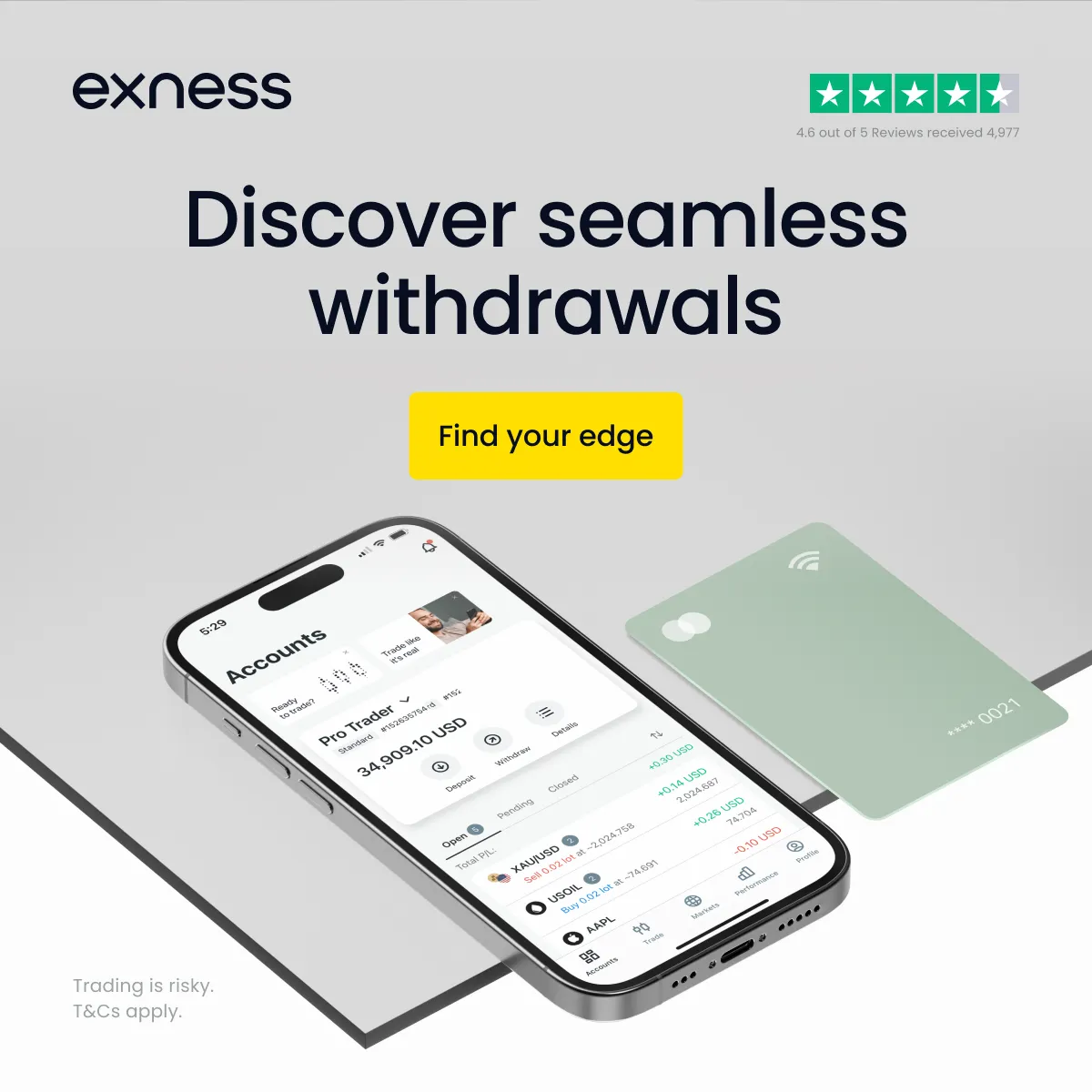
As you research the best online broker account for your needs, you’ll encounter numerous choices. For traders seeking a highly competitive and versatile platform, EXNESS consistently emerges as a strong contender.
EXNESS is a globally recognized broker renowned for its superior trading conditions, particularly its ultra-tight spreads and lightning-fast execution across a comprehensive range of financial instruments. Whether your focus is on Forex, cryptocurrencies (via CFDs), commodities (like gold and oil), or major indices, EXNESS provides seamless access. They offer various account types to suit different trading styles and capital levels, along with industry-leading platforms like MetaTrader 4 and 5, which are packed with advanced analytical tools. With a robust regulatory framework and a commitment to transparency, EXNESS provides a secure and efficient trading environment, making it an excellent option for both novice and experienced traders looking to diversify their portfolios and capitalize on global market movements.

🚨 Common Pitfalls to Avoid with Your Online Broker Account
Even with the best intentions, new investors and traders can stumble. Be aware of these common traps:
- Choosing an Unregulated Broker: The biggest mistake. Without regulation, your funds are at significant risk.
- Ignoring Fees: High spreads, commissions, or hidden fees can significantly eat into your profits over time. Always read the fine print.
- Not Using a Demo Account: Jumping straight into live trading without practice is a recipe for disaster.
- Over-Leveraging: While tempting, using excessive leverage can lead to rapid and substantial losses, often resulting in a margin call and account liquidation.
- Lack of Research: Don’t just pick the first broker you see. Do your due diligence.
- Ignoring Customer Support Quality: When things go wrong (and sometimes they do), good customer support is invaluable. Test them out before committing.
- Falling for “Get Rich Quick” Scams: If a broker or system promises guaranteed, unrealistic returns, it’s a scam. Trading involves risk.
📚 Beyond the Account: Your Continuous Learning Journey
Opening an online broker account is just the beginning. The markets are dynamic, and continuous learning is essential for long-term success.
- Educate Yourself: Utilize the broker’s educational resources, read books, follow reputable financial news, and take courses.
- Develop a Trading Plan: Define your goals, risk tolerance, preferred assets, entry/exit strategies, and risk management rules. Stick to it.
- Practice Risk Management Religiously: This is non-negotiable. Always use stop-loss orders, manage your position size, and never risk more than you can afford to lose.
- Maintain Discipline: Emotions (fear, greed) are your biggest enemies in trading. Stick to your plan, accept small losses, and don’t chase markets.
- Review Your Performance: Regularly analyze your trades to identify what’s working and what isn’t. Learn from both your successes and your mistakes.
Also read : FBS Review 2025: Is This Broker Worth It for Forex and Crypto Traders?
🎯 Your Call to Action: Secure Your Online Broker Account Today!
The power to manage your investments and participate in global financial markets is now more accessible than ever, thanks to the advent of the online broker account. By carefully selecting a reputable and regulated broker, understanding the crucial features, and committing to continuous learning and disciplined risk management, you can unlock a world of financial opportunities. Don’t let uncertainty hold you back from taking control of your financial future.
Are you ready to confidently step into the digital investment world and build your wealth? Take the essential step today and open your secure online broker account to start your journey!
🔥 Elevate Your Trading Potential with EXNESS
For those who are now ready to establish their online broker account and dive into the diverse world of trading, EXNESS offers an exceptional platform. As a leading global broker, EXNESS is renowned for its highly competitive trading conditions, including ultra-tight spreads and lightning-fast execution, across a comprehensive suite of financial instruments like Forex, cryptocurrency CFDs, commodities (such as gold and oil), and major indices. With its robust regulatory framework, transparent execution, and popular trading platforms (MetaTrader 4 & 5), EXNESS provides a secure, efficient, and user-friendly experience designed to support traders at every stage. Their commitment to client education and responsive customer support further solidifies EXNESS as an excellent alternative for anyone looking for a reliable and feature-rich online broker account.