
Introduction
Have you ever stared at a financial chart, feeling a mix of fascination and utter confusion? The world of trading, with its promises of financial freedom and rapid growth, can seem like an exclusive club reserved for the mathematically gifted or those with insider secrets. But what if the path to becoming a confident trader wasn’t as complex as it appears? What if you, too, could learn to navigate the ups and downs of the market with clarity and strategy?
This comprehensive beginner trader guide is your plain-language roadmap. We’ll demystify the essential concepts, provide actionable steps, and equip you with the foundational knowledge to embark on your trading journey successfully. Forget the overwhelming jargon and unrealistic expectations; it’s time to build a solid, sustainable approach to trading, even if you’re starting from square one.
🚀 Why Step into the Trading Arena? The Potential Awaits You
Why are millions drawn to trading? Beyond the allure of quick profits, trading offers a unique set of opportunities for financial growth and personal development. As a new entrant, this beginner trader guide will highlight the core motivations:
- Financial Independence: Imagine generating income beyond your traditional job, potentially giving you more control over your time and lifestyle.
- Flexibility: Trade from anywhere with an internet connection. Whether it’s a few hours a day or just checking in periodically, trading offers a level of autonomy.
- Skill Development: Trading isn’t just about money; it sharpens your analytical thinking, risk assessment, emotional intelligence, and discipline—skills valuable in all aspects of life.
- Inflation Hedge: In an era of fluctuating economies, actively managing your capital through trading can be a proactive way to protect and grow your purchasing power.
- Diverse Opportunities: The global markets offer a vast playground of assets, from currencies and stocks to commodities and cryptocurrencies, ensuring there’s always something new to learn and potentially profit from.
However, it’s crucial to approach trading with realism. It’s a skill that takes time, effort, and continuous learning to master. This beginner trader guide emphasizes building a strong foundation, not chasing overnight riches.
Also read : Stocks Trading for Beginners: How to Start and Succeed in 2025
💡 The Foundations: Essential Concepts for Every Beginner Trader
Before you even think about placing a trade, understanding the basic building blocks of the financial world is non-negotiable.
- What is Trading? At its core, trading is the act of buying and selling financial instruments (like stocks, currencies, or commodities) with the intention of profiting from short- to medium-term price fluctuations. This differentiates it from long-term investing, which focuses on growth over years or decades.
- Financial Instruments:
- Stocks: Represent small ownership stakes in publicly traded companies (e.g., Google, Apple).
- Forex (FX): The foreign exchange market, where you trade currency pairs (e.g., EUR/USD). It’s the largest and most liquid market globally.
- Commodities: Raw materials such as gold, silver, crude oil, and natural gas. Their prices are often influenced by supply and demand, and geopolitical events.
- Cryptocurrencies: Digital or virtual currencies secured by cryptography (e.g., Bitcoin, Ethereum). Known for high volatility.
- Indices: Baskets of stocks representing a specific sector or the overall performance of an economy (e.g., S&P 500, Dow Jones Industrial Average).
- Long vs. Short:
- Going Long (Buying): You buy an asset because you anticipate its price will rise.
- Going Short (Selling): You sell an asset you don’t own (with the expectation of buying it back at a lower price later) because you anticipate its price will fall. This allows you to profit in declining markets.
- Bid, Ask, and Spread:
- Bid Price: The maximum price a buyer is willing to pay for an asset.
- Ask Price (Offer): The minimum price a seller is willing to accept for an asset.
- Spread: The difference between the bid and ask price. This is a cost you pay when entering a trade and represents the broker’s compensation. Tighter spreads are better for you.
- Pips, Points, or Ticks: These are the smallest units of price movement for a given asset. In Forex, a “pip” (percentage in point) is typically the fourth decimal place in a currency pair (e.g., a move from 1.2000 to 1.2001 is one pip). For stocks, it’s often referred to as points or cents.
- Leverage and Margin:
- Leverage: Allows you to control a large trading position with a relatively small amount of your own capital. For example, 1:100 leverage means for every $1 of your money, you can control $100 worth of the asset.
- Margin: The actual amount of your own money required in your trading account to open and maintain a leveraged position.
- A Word of Caution: While leverage can amplify profits, it equally amplifies losses. It’s a powerful tool that must be used with extreme caution, especially by a beginner trader.
🛠️ Setting Up Your Trading Basecamp: Getting Started Right
Before you even look at a chart, ensure your foundation is solid. This beginner trader guide emphasizes setting up correctly.
- 1. Choose a Reputable Online Broker: This is arguably the most crucial decision. Your broker is your gateway to the markets. Look for:
- Regulation: Ensure the broker is regulated by well-known financial authorities (e.g., FCA in the UK, CySEC in Cyprus, ASIC in Australia, BAPPEBTI in Indonesia). Regulation offers a layer of protection for your funds.
- Security of Funds: Check how client funds are segregated from the company’s operational funds and if there are any investor compensation schemes.
- Trading Platform: Is it user-friendly, stable, and equipped with the tools you need? Popular platforms include MetaTrader 4 (MT4), MetaTrader 5 (MT5), cTrader, or the broker’s proprietary platform.
- Competitive Spreads & Fees: These directly impact your profitability. Compare fees across brokers.
- Asset Range: Does the broker offer the instruments you’re interested in trading (Forex, stocks, crypto, commodities)?
- Customer Support: When you’re just starting, responsive and knowledgeable support can be invaluable.
- Demo Account: Absolutely essential for practice without financial risk.
- 2. Open and Fund Your Trading Account: This process involves a “Know Your Customer” (KYC) verification where you’ll provide identity documents (like your KTP in Indonesia) and proof of address. Once approved, you can deposit funds using various methods (bank transfer, e-wallets, credit/debit cards).
- 3. Familiarize Yourself with the Trading Platform: Don’t rush this step. Spend time clicking through all the features. Learn how to navigate charts, customize indicators, understand different order types (market, limit, stop), and manage your open positions. Many brokers offer tutorials.
- 4. Start with a Demo Account (Paper Trading): This cannot be stressed enough in any beginner trader guide. Use virtual money to practice your strategies, get comfortable with the platform, and experience market dynamics without any financial risk. Treat your demo account seriously, as if it were real money, to build disciplined habits.
📈 Your Playbook: Developing a Trading Strategy
Trading without a strategy is like driving without a destination. Every successful beginner trader needs a clear plan.
- Technical Analysis (TA): This involves studying historical price charts and volume data to predict future price movements.
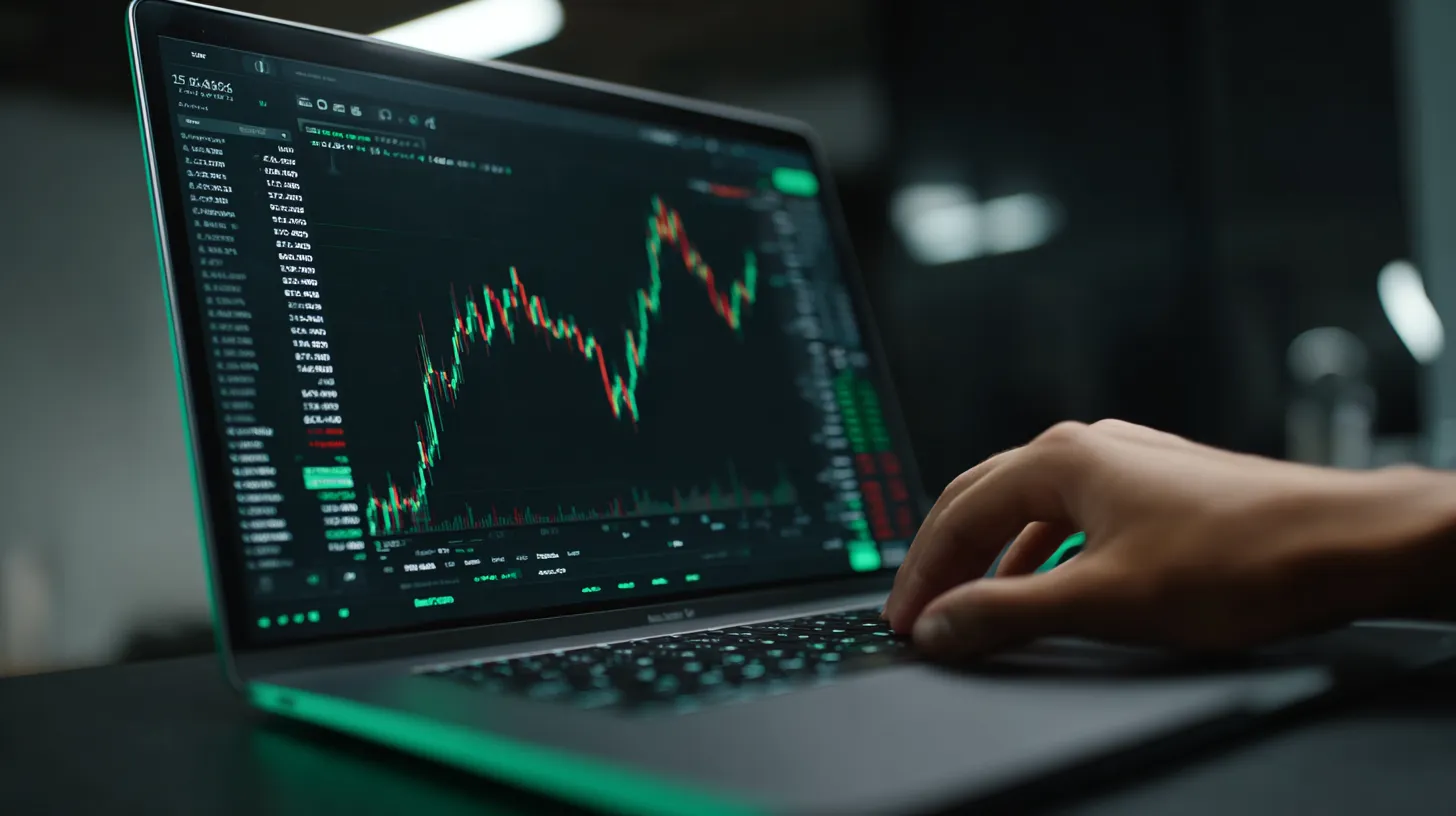
- Candlestick Charts: These visual representations show the open, close, high, and low prices for a specific time period (e.g., 1-hour, 1-day). They provide insights into market sentiment.
- Support and Resistance Levels: These are price points where an asset tends to stop falling (support) or rising (resistance). They often act as potential reversal points.
- Trendlines: Lines drawn on a chart connecting swing highs or swing lows to identify the prevailing direction of the market (uptrend, downtrend, or sideways).
- Technical Indicators: Tools like Moving Averages (MA), Relative Strength Index (RSI), and Moving Average Convergence Divergence (MACD) help confirm trends, measure momentum, and identify overbought/oversold conditions. Start with just one or two to avoid over-complication.
- Fundamental Analysis (FA): This involves evaluating an asset’s intrinsic value by examining economic, financial, and other qualitative and quantitative factors.
- Economic Data: Keep an eye on major economic announcements (e.g., GDP, inflation rates, employment figures, interest rate decisions from central banks). These can significantly impact currency pairs and indices.
- Company News (for Stocks): Earnings reports, product launches, mergers, and management changes directly affect stock prices.
- Geopolitical Events: Wars, political instability, and trade disputes can influence global markets and asset prices.
- Trading Styles:
- Scalping: Very short-term trades, often lasting seconds to minutes, aiming for tiny profits. Requires intense focus and fast execution. (Not recommended for a beginner trader).
- Day Trading: All trades are opened and closed within the same trading day. No positions are held overnight.
- Swing Trading: Trades held for a few days to several weeks, aiming to capture larger “swings” in price. This offers more flexibility and less screen time.
- Position Trading: Long-term trades, held for weeks, months, or even years, based on major market trends. Recommendation for Beginners: Start with swing trading or position trading on longer timeframes (e.g., daily charts). These styles are less stressful and provide more time for analysis, which is ideal for a beginner trader.
🛡️ Your Lifeline: Indispensable Risk Management
This is, without a doubt, the most critical section of any beginner trader guide. Without proper risk management, even the most brilliant trading strategy will eventually lead to losses.
- Only Trade What You Can Afford to Lose: This is the golden rule. Never put money into trading that you need for living expenses, emergencies, or debt repayment. Assume any capital you invest could be lost.
- Position Sizing: Determine the exact amount of capital you are willing to risk on each individual trade. A common guideline is to risk no more than 1-2% of your total trading capital per trade. For example, if you have a $1,000 account, you shouldn’t risk more than $10-$20 on any single trade.
- Always Use Stop-Loss Orders: This is your primary defense mechanism. A stop-loss order automatically closes your trade if the price moves against you to a predetermined level, limiting your potential loss. Never enter a trade without setting a stop-loss.
- Set Take-Profit Orders: Define your target profit level for each trade. A take-profit order automatically closes your trade when it reaches your desired profit, locking in your gains.
- Risk-Reward Ratio: Before entering any trade, calculate your potential profit versus your potential loss. Aim for trades where your potential profit is at least 1.5 to 2 times your potential loss (e.g., risking $10 to make $20).
- Avoid Over-Leveraging: While leverage can be tempting for its potential to amplify profits, it equally amplifies losses. As a beginner trader, use minimal or no leverage until you are consistently profitable.
- Diversification: Don’t put all your capital into one single trade or one single asset type. Spread your risk across different instruments or strategies.
🔥 Ready to Take Action? Begin Your Trading Journey with EXNESS
As a beginner trader diligently absorbing this guide, the next crucial step is choosing a reliable platform to execute your strategies. While there are many options available, EXNESS stands out as a highly recommended broker, offering an excellent and supportive environment for diverse trading activities.
EXNESS is a globally recognized broker celebrated for its competitive trading conditions, including tight spreads and ultra-fast execution across a wide range of financial instruments. Whether your interest lies in Forex, cryptocurrencies (as CFDs), commodities (like gold and oil), or major indices, EXNESS provides access to these markets. They offer flexible leverage options, various account types to suit different capital levels, and popular, feature-rich trading platforms like MetaTrader 4 and 5. With a strong regulatory framework and a commitment to transparency, EXNESS provides a secure, efficient, and user-friendly ecosystem designed to support traders at every stage, making it an ideal choice for any beginner trader looking for a solid starting point.
🧠 The Inner Game: Mastering Trading Psychology
Even with the best strategies and risk management, your emotions can be your biggest enemy in trading. This beginner trader guide wouldn’t be complete without addressing the psychological aspect.
- Emotional Control: Fear and greed are powerful forces. Fear can lead to panic selling at the worst possible time, while greed can make you hold onto winning trades too long, turning them into losses. Recognize these emotions and stick to your plan.
- Discipline: Adhere to your trading plan without deviation. Don’t let impulses or external hype sway your decisions.
- Patience: Not every day offers a good trading opportunity. Wait for your setups. Don’t force trades.
- Accept Losses: Losses are an inevitable part of trading. Learn to accept them quickly and move on. Don’t let a small loss turn into a catastrophic one by “hoping” for a recovery.
- Trading Journal: Keep a detailed record of every trade. Note down: why you entered, why you exited, your emotional state, and the outcome. This helps you learn from mistakes and identify what works for you.
- Don’t Overtrade: Trading too frequently can lead to mental fatigue, increased transaction costs, and impulsive decisions. Focus on quality setups over quantity.

🌟 The Journey Continues: Lifelong Learning for the Aspiring Trader
Becoming a consistently profitable trader isn’t a sprint; it’s a marathon of continuous learning, adaptation, and self-improvement.
- Stay Informed: The financial markets are constantly evolving. Keep up with global economic news, central bank policies, and technological advancements.
- Continuous Education: Read books, watch webinars, enroll in reputable courses, and study successful traders.
- Review and Adapt: Regularly analyze your trading performance. What strategies are working? What isn’t? Be prepared to adjust your approach based on market conditions and your learning.
- Seek Mentorship (Wisely): If possible, learn from experienced, genuinely successful traders. Be extremely cautious of anyone promising guaranteed returns or selling “secret” systems.
- Prioritize Well-being: Trading can be stressful. Ensure you maintain a healthy lifestyle, get adequate sleep, and manage stress effectively to keep a clear and focused mind.
Also read : Top Forex Broker Guide 2025: Choosing the Right Partner for Your Trading Journey
🎯 Your Call to Action: Start Your Intelligent Trading Adventure Today!
You’ve now absorbed the core principles outlined in this comprehensive beginner trader guide. The path to becoming a profitable trader is challenging but incredibly rewarding for those who commit to education, practice discipline, and rigorously manage risk. Remember, the journey isn’t about perfection, but about consistent progress and learning from every experience.
Are you ready to transform your curiosity into concrete trading skills and begin your journey towards mastering the financial markets? Take the first disciplined step today and embark on your path to becoming a confident and successful trader!
🔥 Elevate Your Trading Experience with EXNESS
For the aspiring beginner trader who is now equipped with foundational knowledge and is seeking a robust and versatile platform, EXNESS offers an outstanding trading environment. As a leading global broker, EXNESS provides highly competitive conditions, including ultra-tight spreads and flexible leverage, across a comprehensive suite of financial instruments like Forex, cryptocurrency CFDs, commodities (such as gold and oil), and major indices. With its strong regulatory framework, transparent execution, and popular trading platforms (MetaTrader 4 & 5), EXNESS provides a secure, efficient, and user-friendly experience designed to support traders at every stage. Their commitment to client education and responsive customer support further solidifies EXNESS as an excellent alternative for anyone ready to dive into diversified online trading.