
🎯 Why this matters
how to control emotions in forex is the quiet edge that separates consistent traders from impulsive gamblers. If you can recognize triggers, hardwire rules, and execute with calm, your strategy stops drowning in noise and finally gets the results it deserves.
📈 The real cost of emotion
Every blown stop, revenge entry, or FOMO chase is a tax you pay to the market. Learning how to control emotions in forex means identifying your top three emotional leaks—fear of missing out, fear of loss, and overconfidence—and building rules that turn those leaks into advantages.
🧭 Build a rules-based edge
Strategies are fragile when they rely on mood. To harden your edge, write a one-page plan that answers: when to trade, what to trade, how to size, where to exit. The more precise this is, the easier it becomes to apply how to control emotions in forex under pressure.
🛡️ Risk rules you never break
Pick a fixed account risk per trade—often 0.5%–1%—and commit. Use a stop loss where your thesis is invalidated, not where your feelings prefer. By anchoring risk in math, you practice how to control emotions in forex with decisions that ignore adrenaline spikes.
Also read : How Does Trading Psychology Work: A Deep Dive Into the Mindset of Winning Traders
🧘 Pre-trade routine
A routine primes your brain to execute, not improvise. Two minutes of breathing, a 30-second visualization of your setup, and a 10-second checklist can decide your day. This ritual is a proven way of how to control emotions in forex before they hijack your first trade.
⏱️ In-trade protocol
Predefine your behavior for every event: at entry, after +1R move, at news spikes, near stop, and close. When the market heats up, you will not. This is how to control emotions in forex in real time—by following a script you wrote when calm.
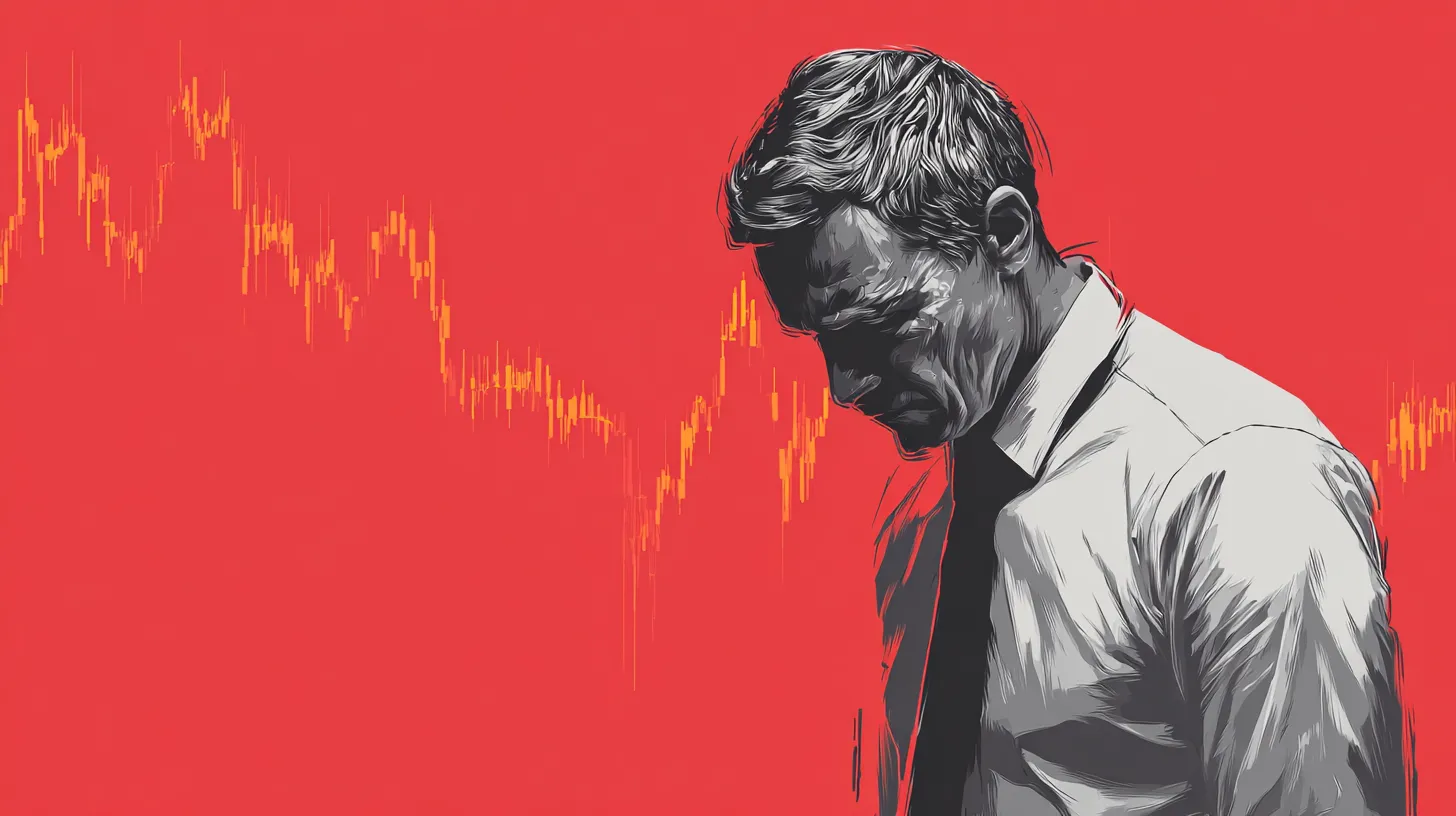
📓 Post-trade review
You cannot fix what you won’t measure. Screenshot every trade, annotate reason, emotion level from 1–10, rule adherence, and R-result. Over 20–30 trades, patterns jump off the page. That is how to control emotions in forex with data, not guesswork.
🧠 Name your biases
Loss aversion, confirmation bias, and recency bias are the invisible puppeteers. Label them out loud: “This is FOMO.” Naming breaks the spell. Practicing this label-response pattern is how to control emotions in forex without suppressing them—acknowledge, then act by rules.
🔁 Process over outcome
Your job is to take A+ setups and execute your plan. The market’s job is to distribute wins and losses. Trading from a process identity—“I follow my rules”—is how to control emotions in forex even after a losing streak, because your self-worth no longer swings with P/L.
📋 Tools and checklists
Use a pre-trade checklist (market condition, setup quality, risk, correlation), an in-trade checklist (move stop? partial take? no chase), and a post-trade checklist (journal, screenshot, lesson). Systems save you when willpower fades—another cornerstone of how to control emotions in forex.
🧬 Deep dive: your brain on trading
Your limbic system is built for survival, not trading. Spikes in cortisol and adrenaline prepare you to fight or flee, not to hold a winning position or wait for a pullback. Translate biology into tactics: breathe slowly to lower heart rate, relax your jaw and shoulders, widen your field of view. These micro actions signal safety to your nervous system and restore access to your prefrontal cortex—the part that follows plans and manages risk.
🧪 Deep dive: drills that rewire
Run three drills daily for two weeks. One: Titrate discomfort—stare at an open profit without interfering for 60 seconds; learn that patience is safe. Two: Simulated stress—replay a fast chart and practice sticking to exit rules as price whips; engrain rules under speed. Three: Urge surfing—when you feel compelled to move a stop, set a 90-second timer; urges fade if you wait. Repetition here builds emotional stamina.
Also read : Master Forex Safely: How a Forex Demo Account Can Sharpen Your Trading Edge
🧩 Deep dive: the three-rule shield
Install three “never break” rules: never widen stops, never add to losers, never trade without a setup screenshot. These act like guardrails on a mountain road. Even when your emotions surge, the car stays on track. Over time, bending becomes unthinkable—your identity shifts to “rule-keeper.”
🛠️ Position sizing that calms the mind
Volatility-adjusted sizes make trades feel less personal. Use ATR or recent range to set stops and size so your dollar risk is constant. When each trade risks the same small slice of equity, a loss is a statistic, not an identity blow. Consistency in risk begets consistency in emotion.
🧾 Journaling that actually works
Keep it light and consistent: context, setup, entry/exit, rule adherence, emotion tag, lesson, next-step. Color-code A, B, C setups. Filter your journal weekly to see what makes you money and what taxes you. The goal isn’t prose—it’s pattern detection that drives better rules.
🧭 Navigating news and volatility
Decide ahead of time: stand aside, trade smaller, or tighten risk around high-impact news. Surprises become manageable when they are pre-labeled. Emotional control isn’t stoicism—it’s clarity about what you will and will not do when the market turns loud.
🚦 Traffic-light execution
Use a color code to stabilize behavior. Green: A+ setup, full size. Yellow: mixed signals, half size or skip. Red: no edge, observe only. This visual cue reduces impulsive entries and instantly boosts expectancy by avoiding your worst trades.
🧩 Templates for decisions
Build templated responses for common scenarios. If price is one ATR against you, do X; if structure flips, do Y; if spread widens, do Z. Choices shrink from dozens to three. Decision fatigue drops, and with it, the emotional noise that derails execution.
🎛️ Single-variable changes
Only tweak one variable per 20-trade batch—entry filter, exit rule, or size—never all three. Emotional chaos often masquerades as “optimization.” Isolate cause and effect so your confidence grows from evidence, not hope. Professionalism is simply controlled experiments over time.
🧩 Environment engineering
Your setup shapes your state. Clean charts, minimal indicators, muted news feeds, limited watchlists, and a dedicated trading block reduce cognitive load. Fewer inputs, fewer urges. Make the right action the easy action by designing your workstation and routine with intent.
🕰️ Timeframes and temperament
If you’re prone to anxiety, shift to higher timeframes; if you’re bored, define a specific session and fewer pairs. Aligning timeframe with temperament cuts the emotional drag that leads to overtrading. Fit the game to you, not the other way around.

🧱 Boundaries that protect focus
Set a daily loss cap and a max trade count. Once hit, you stop. Protecting your mental capital is non-negotiable. Tomorrow’s opportunities are worth more than today’s frustration. Guardrails like these prevent one bad hour from sabotaging an entire month.
🔍 Case study: from tilt to control
A day trader kept turning green mornings into red afternoons. Fix: a strict three-trade cap and a 30-minute midday walk. Result: fewer trades, higher average R, calmer execution. The lesson is simple: constraints create freedom. By narrowing choices, he stabilized emotions and scaled results.
🧗 Habits that scale discipline
Use habit stacking: after you open your platform, run the pre-trade checklist; after each exit, log the trade and capture a screenshot; after session end, rate discipline 1–10 and write one improvement. Tiny consistent behaviors beat heroic bursts. Momentum comes from reliability.
🚀 CTA: your next 7 days
Print your one-page plan, define three never-break rules, set 0.5%–1% risk per trade, and commit to 20 trades with full journaling. If you do only this, you’ll feel a tangible drop in stress and a rise in clarity. The market won’t get easier—but you will get stronger.
🤝 Broker choice that supports discipline
Execution, costs, and platform stability influence your emotions more than you think. Favor brokers with tight, consistent spreads, fast order fills, reliable platforms (MT4/MT5), and quick deposits/withdrawals. The smoother your infrastructure, the fewer emotional spikes you face.
🧭 EXNESS: a smart alternative
If you want a broker aligned with disciplined execution, EXNESS is a strong option. It is known for competitive spreads, fast and dependable order execution, flexible account types for different strategies, and robust platform support on MT4/MT5. You also get straightforward pricing, easy funding and withdrawals, and 24/5 support—practical features that help you stay focused on your rules, not your tools. For traders building consistency, that operational reliability is a real edge.