
Introduction
Bitcoin. The name itself is synonymous with financial revolution, explosive growth, and the future of money. It’s captivated millions worldwide, transforming humble investments into fortunes and inspiring countless new traders. The digital asset market, spearheaded by Bitcoin, offers unprecedented opportunities for those willing to learn its unique rhythms. But for many standing on the sidelines, the vastness and volatility of this market can feel overwhelming, leading to a fundamental question: how to trade Bitcoin effectively and safely?
This comprehensive guide will meticulously demystify the process, breaking down the complexities of the Bitcoin market into clear, actionable steps. We’ll explore the essential tools, strategies, and mindset required to navigate this thrilling landscape, whether you’re a complete beginner or looking to refine your approach. Prepare to gain crystal-clear insights into the mechanics, risks, and rewards, empowering you to confidently embark on your journey and truly understand how to trade Bitcoin in today’s dynamic financial world.
🚀 The Bitcoin Phenomenon: Why Trade This Digital Asset?
Bitcoin’s journey has been nothing short of extraordinary. From its obscure beginnings to becoming a global financial force, its unique characteristics make it a compelling asset for traders. Understanding these drivers is the first step in learning how to trade Bitcoin.
The allure of Bitcoin for traders stems from several key attributes:
- Volatility and Opportunity 📈: Bitcoin’s price swings are legendary. While this means higher risk, it also creates frequent opportunities for significant gains for those who can predict movements.
- Decentralization 🌐: Operating outside traditional financial systems, Bitcoin offers a sense of autonomy and is often seen as a hedge against inflation and economic instability.
- 24/7 Market ⏱️: Unlike traditional markets, Bitcoin trades around the clock, allowing traders to react to global events at any time.
- Growing Adoption 💸: Increasingly, institutions, businesses, and even nations are adopting Bitcoin, lending it more legitimacy and potentially long-term value.
These factors make Bitcoin a magnetic asset, driving countless individuals to learn how to trade Bitcoin and participate in its exciting market.
Also read : Is Crypto Trading Halal or Haram? A Comprehensive 2025 Guide for Muslim Investors
💡 Laying the Foundation: What You Need Before You Start
Before you even think about placing your first trade, mastering how to trade Bitcoin requires setting up a solid foundation. This involves choosing the right tools and understanding the basic pathways to engagement.
- 1. Choose Your Trading Method: Spot vs. CFDs 🤝
- Spot Trading (Direct Ownership) 🪙: This means you buy and own actual Bitcoin on a cryptocurrency exchange. Ideal for long-term holding or if you want to use Bitcoin for payments. You’ll need a crypto wallet to store it.
- CFD Trading (Speculation) 📈: This involves trading Contracts for Difference (CFDs) with a Forex/CFD broker. You don’t own the actual Bitcoin; instead, you speculate on its price movements. This method often comes with leverage, allowing amplified positions, and the ability to profit from price declines (short-selling). Platforms like EXNESS facilitate this.
- Decision Point: Your choice dictates the type of platform and strategy you’ll use. For this guide, we’ll cover both, as understanding how to trade Bitcoin encompasses both approaches.
- 2. Select a Reputable Platform (Exchange or Broker) 🏦
- For Spot Trading: Look for established cryptocurrency exchanges (e.g., Coinbase, Binance, Kraken) known for security, liquidity, and regulatory compliance in their operating regions.
- For CFD Trading: Choose a globally regulated Forex/CFD broker (like EXNESS) that offers Bitcoin CFDs. Regulation ensures fund segregation and investor protection.
- 3. Fund Your Account 💳
- Fiat Currency: Most platforms accept deposits via bank transfers, credit/debit cards, or e-wallets.
- Cryptocurrency: Many platforms also allow deposits in other cryptocurrencies (e.g., USDT, ETH), offering faster and sometimes cheaper funding.
- 4. Understand Basic Order Types 📊
- Market Order: Buy or sell immediately at the current best available price.
- Limit Order: Buy or sell at a specific price or better. Your order only executes if the market reaches your set price.
- Stop-Loss Order: An order to automatically close a trade if the price moves against you to a certain point, limiting potential losses. Essential for how to trade Bitcoin safely.
- Take-Profit Order: An order to automatically close a trade if the price moves in your favor to a specific profit target.
This foundational knowledge is critical for safely navigating how to trade Bitcoin.
⚙️ Strategy & Analysis: Your Roadmap for How to Trade Bitcoin
Trading Bitcoin isn’t just about buying low and selling high; it requires a structured approach. Understanding how to trade Bitcoin effectively means employing analytical tools and developing a clear strategy.
- 1. Technical Analysis (TA) 📉
- Explanation: This involves analyzing historical price charts and volume data to predict future price movements. TA relies on the idea that market participants react predictably to similar patterns.
- Tools:
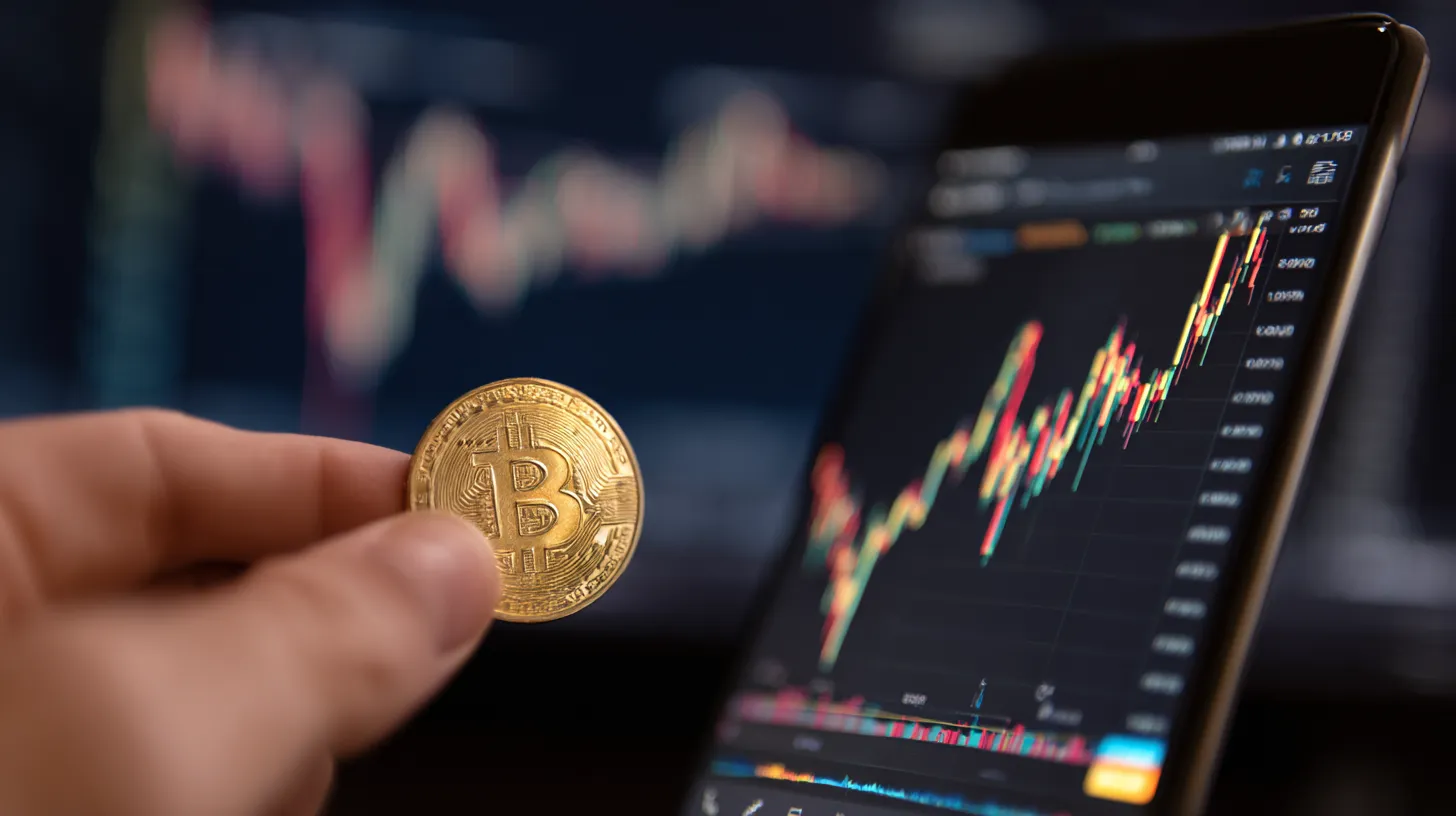
- Candlestick Charts: Visual representations of price movements (open, high, low, close).
- Indicators: Tools like Moving Averages (MA), Relative Strength Index (RSI), Moving Average Convergence Divergence (MACD), and Bollinger Bands help identify trends, momentum, and overbought/oversold conditions.
- Support & Resistance: Price levels where buying (support) or selling (resistance) pressure is historically strong.
- Application: Identifying trends, entry/exit points, and potential reversals is key when learning how to trade Bitcoin using TA.
- 2. Fundamental Analysis (FA) 📰
- Explanation: This involves evaluating the underlying factors that can influence Bitcoin’s long-term value and price, rather than just chart patterns.
- Factors:
- Adoption Rates: Increasing use by individuals, businesses, and institutions.
- Regulatory News: Government decisions on crypto, new laws, or bans.
- Technological Developments: Upgrades to the Bitcoin network, or new innovations in the broader crypto space.
- Macroeconomic Factors: Inflation, interest rates, geopolitical events, and the strength of the U.S. Dollar.
- Halving Events: Bitcoin’s supply reduction every four years.
- Application: FA helps in understanding long-term trends and making informed decisions on how to trade Bitcoin based on its intrinsic value drivers.
- 3. Develop a Trading Plan 📝
- Entry Strategy: Under what conditions will you enter a trade? (e.g., “when RSI crosses above 30 on a 4-hour chart”).
- Exit Strategy: When will you take profit? When will you cut losses? (e.g., “take profit at resistance,” “cut losses if price breaks below support”).
- Risk-Reward Ratio: Define how much you’re willing to risk for every unit of potential profit (e.g., 1:2 risk-reward means risking $1 to potentially gain $2).
- Position Sizing: How much capital will you allocate to each trade?
- Emotional Discipline: Your plan helps you avoid impulsive decisions. This is crucial for consistent success in how to trade Bitcoin.
Combining TA and FA with a disciplined trading plan is paramount to effectively understand how to trade Bitcoin.
🔥 The Real Risks: A Must-Know Before Trading Bitcoin
Bitcoin’s appeal is undeniable, but it’s a high-risk asset. Understanding how to trade Bitcoin responsibly means acknowledging and mitigating these significant risks.
- Extreme Price Volatility 🌪️: Bitcoin can experience massive price swings (up or down) in very short periods. While this offers profit potential, it can lead to rapid and significant losses if the market moves against you.
- Security Risks & Hacks 🔒: While the Bitcoin blockchain is highly secure, exchanges and individual wallets can be vulnerable to hacks, phishing, and malware. Losing access to your funds is a real threat.
- Regulatory Uncertainty ⚖️: The regulatory landscape for Bitcoin and cryptocurrencies is still evolving globally. Sudden bans or restrictive regulations in major economies can cause sharp price declines.
- Market Manipulation & Whale Activity 🐳: Due to its relatively smaller market cap compared to traditional assets, large holders (“whales”) can significantly influence Bitcoin’s price with large buy or sell orders, sometimes leading to unpredictable movements.
- Liquidity Issues (for some altcoins, less so for BTC) 🌊: While Bitcoin is generally liquid, some smaller cryptocurrencies can have low liquidity, leading to significant price impact from your trades or difficulty exiting positions.
- Emotional Trading 🧠: The intense hype, fear, and greed surrounding Bitcoin can lead to impulsive decisions, such as FOMO (Fear Of Missing Out) during rallies or panic selling during dips, often resulting in losses. Understanding how to trade Bitcoin involves mastering your emotions.
These risks underscore that responsible trading is about more than just knowing how to trade Bitcoin; it’s about knowing how to manage risk.
📚 Essential Risk Management for Trading Bitcoin
Successfully learning how to trade Bitcoin is synonymous with mastering risk management. Without it, even the most brilliant strategies can fail.
- 1. Never Invest More Than You Can Afford to Lose 💰: This is the golden rule of all investing, especially for volatile assets like Bitcoin. Treat any capital used for trading as risk capital.
- 2. Use Stop-Loss Orders Religiously 🛑: Always define your maximum acceptable loss for each trade and place a stop-loss order. This automatically closes your position if the price hits your predetermined level, preventing larger losses.
- 3. Position Sizing 📏: Calculate how much capital to allocate to each trade based on your overall account size and your risk tolerance. A common rule is to risk no more than 1-2% of your trading capital per trade.
- 4. Understand Leverage (if applicable) ⚔️: If you’re trading Bitcoin CFDs with leverage, remember it amplifies both gains and losses. Start with low leverage (e.g., 1:5 or 1:10) and only increase it as you gain experience and confidence.
- 5. Diversification (Where Appropriate) 🌐: While this article focuses on Bitcoin, for a broader portfolio, consider diversifying across different asset classes or even different cryptocurrencies, though even major altcoins often follow Bitcoin’s lead.
- 6. Secure Your Funds 🔒: Use strong, unique passwords. Enable Two-Factor Authentication (2FA) on all your exchange/broker accounts. Consider hardware wallets for long-term storage of actual Bitcoin if you own it.
- 7. Avoid Emotional Trading 🧘: Stick to your trading plan. Don’t chase pumps (FOMO) or panic sell during dumps (FUD). Discipline is your best friend when learning how to trade Bitcoin.
These strategies are non-negotiable for anyone serious about how to trade Bitcoin profitably and sustainably.

✅ Your Action Plan: Step-by-Step on How to Trade Bitcoin
Ready to put knowledge into action? Here’s a streamlined action plan on how to trade Bitcoin.
- 1. Educate Yourself Further 📖: Continue learning about technical analysis, fundamental drivers, and market psychology. There are countless free resources (articles, videos) and paid courses available.
- 2. Practice on a Demo Account 💻: Most reputable brokers and exchanges offer demo accounts. This allows you to practice your strategies, understand the platform, and gain experience with virtual money before risking real capital. This is a crucial step in truly learning how to trade Bitcoin.
- 3. Start Small (Real Money) 🤏: Once confident with a demo, begin with a very small amount of real capital – an amount you are entirely comfortable losing. The psychological aspect of real money trading is different.
- 4. Develop and Refine Your Strategy 📝: Start with a simple strategy, test it, analyze results, and refine it based on what works (and what doesn’t).
- 5. Stay Informed and Adapt 📰: The crypto market is dynamic. Keep up with news, regulatory changes, and technological advancements. Be prepared to adapt your strategies as market conditions evolve.
- 6. Monitor and Review Regularly 📊: Regularly review your trades – both winners and losers. What went right? What went wrong? Why? Learning from your own experience is invaluable for how to trade Bitcoin.
This systematic approach is the most effective way to learn how to trade Bitcoin and build a solid foundation for long-term success.
Also read : Best Crypto Broker in 2025: Your Ultimate Guide to Safe, Smart, and Profitable Crypto Trading
🎯 Your Call to Action: Take Control of Your Financial Future with Bitcoin!
The journey of learning how to trade Bitcoin is an exciting one, filled with unique opportunities and significant challenges. It demands knowledge, discipline, and a commitment to continuous learning. By understanding its mechanics, employing robust risk management, and choosing the right platform, you can confidently navigate this revolutionary market.
Don’t let the complexity deter you. Empower yourself with education, practice relentlessly, and choose a trading partner that provides the tools and security you need. Take the informed step today and embark on your path to mastering how to trade Bitcoin effectively and responsibly!
🔥 Your Powerful Partner for Trading Bitcoin CFDs: EXNESS
For those ready to delve into how to trade Bitcoin with a reputable and robust platform, EXNESS stands out as an exceptional choice, particularly for engaging with Bitcoin via CFDs. Renowned globally for its ultra-tight spreads, lightning-fast execution, and highly flexible leverage (up to unlimited under specific conditions), EXNESS provides an ideal environment for active Bitcoin traders. It offers access to Bitcoin CFDs and a wide range of other cryptocurrencies on the industry-leading MetaTrader 4 and MetaTrader 5 platforms, available across desktop and highly functional mobile apps. Crucially, EXNESS is backed by top-tier global regulations (FCA, CySEC), ensuring robust security measures like segregated client funds and negative balance protection. With its diverse and efficient deposit/withdrawal methods, including crypto options, and 24/7 multilingual customer support, EXNESS provides a comprehensive, secure, and highly competitive solution for anyone looking to master how to trade Bitcoin as a CFD.