
📉 The Invisible Thieves of Your Trading Capital
Fear Greed and FOMO in Forex are the invisible thieves that rob even the most brilliant technical analysts of their capital before they can even realize the trade has turned. You can have the most expensive indicators, the most sophisticated software, and a strategy backed by a decade of data, but if your mind is not calibrated to handle the psychological pressure of a live market, you are merely a spectator in your own financial tragedy. The market is not just a battle of charts; it is a battle of self-control. Every red and green candle is designed to trigger a biological response that forces you to act against your own best interests. This article will deconstruct these emotional traps and provide you with the psychological armor needed to execute your setups with surgical precision.
🛡️ The Biological War Inside Your Brain
To conquer Fear Greed and FOMO in Forex, you must first understand that your brain is technically wired to fail at trading. Millions of years of evolution have programmed us to avoid pain (Fear) and seek resources (Greed). When you see a trade move against you, your “Amygdala”—the brain’s emotional center—triggers a fight-or-flight response. Your heart rate increases, your vision narrows, and your ability to think rationally evaporates. In this state, you aren’t a trader; you are a prey animal trying to survive. Learning to recognize this chemical surge is the first step in moving from an emotional participant to a strategic operator.
Also read : Trading Psychology 101: Why 90% of Traders Fail (And How to Join the Winning 10%)
🛑 The Anatomy of Fear: Cutting Winners Short
Fear is the primary reason why traders never achieve a positive expectancy. Even when you identify a perfect setup, Fear Greed and FOMO in Forex can lead you to close a trade far too early. You see a small profit, and the fear of “giving it back to the market” becomes so intense that you exit long before the price reaches your target. Paradoxically, this same fear often keeps you in a losing trade. You fear the pain of realizing a loss, so you move your stop-loss further away, hoping for a reversal that never comes. This asymmetry—cutting wins short and letting losses run—is the hallmark of an amateur mindset.
💰 The Trap of Greed: Why One Trade Isn’t Enough
Greed is the silent killer that turns a profitable day into a catastrophic loss. In the context of Fear Greed and FOMO in Forex, greed manifests as “Over-leveraging” and “Over-trading.” When you have a few winning trades, your brain is flooded with dopamine, giving you a false sense of invincibility. You start to believe you “know” what the market will do next. You increase your lot size to an unsustainable level, chasing a “home run” that could change your life. Greed blinds you to the reality of risk, and as the saying goes on Wall Street: “Bulls make money, bears make money, but pigs get slaughtered.”
🔍 Deep Dive: The Psychology of FOMO (Fear Of Missing Out)
The most modern and perhaps most destructive element of Fear Greed and FOMO in Forex is the social pressure of the “Fear of Missing Out.” We live in an era where social media feeds are filled with screenshots of massive profits and 100% win rates. When you see a currency pair like GBP/USD rallying 200 pips without you, your brain experiences a form of social exclusion pain. You feel “stupid” for not being in the trade, so you “jump in” at the absolute top of the move.
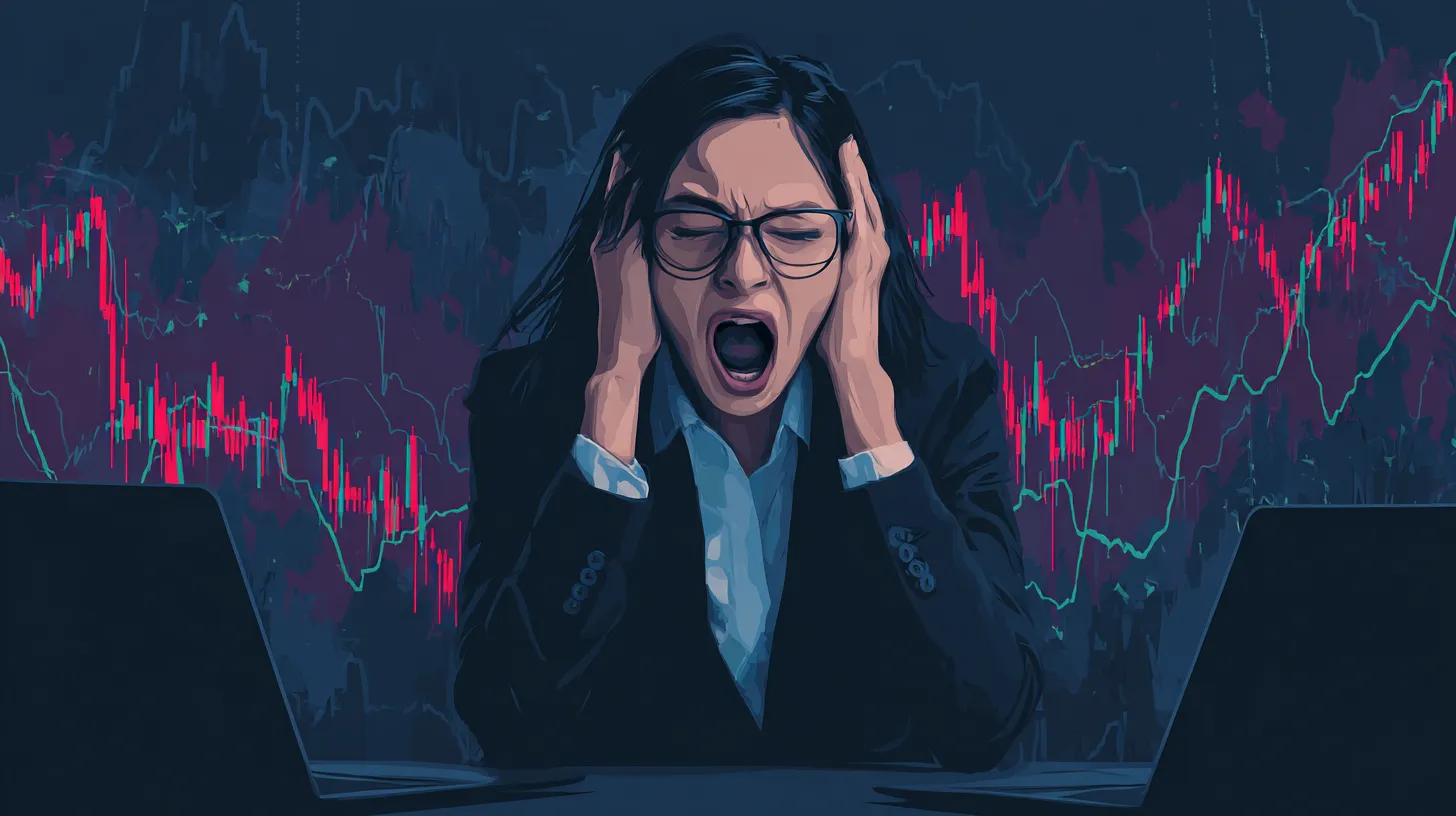
FOMO is a result of comparing your “behind-the-scenes” with everyone else’s “highlight reel.” In reality, the market offers thousands of opportunities every year. FOMO disappears when you realize that your edge is a mathematical certainty over a large sample of trades, not a desperate scramble to catch every single move. If you missed the entry, the trade is gone. Chasing it is not trading; it is gambling. You can find more in-depth strategies on avoiding these traps at LordCandle, where the focus is on disciplined execution rather than chasing hype.
🧠 Cognitive Biases: The Puppeteers of the Chart
Our struggle with Fear Greed and FOMO in Forex is exacerbated by cognitive biases like the “Confirmation Bias” and the “Sunken Cost Fallacy.” Confirmation bias leads you to look only for information that supports your trade while ignoring the warning signs that you are wrong. The Sunken Cost Fallacy makes you feel that because you have already lost money or time on a trade, you “must” stay in it to get your “fair share” back. To be a professional, you must learn to view every moment in the market as a completely fresh event, independent of what happened five minutes ago or yesterday.
📊 The Power of the 1% Rule and Risk/Reward
The only objective cure for Fear Greed and FOMO in Forex is rigid, mathematical risk management. When you risk only 1% of your account on a trade, the “Fear” response is significantly muted because no single loss can hurt you. Furthermore, by ensuring a minimum $Risk:Reward = 1:2$, you mathematically prove to your brain that you can be wrong 50% of the time and still be highly profitable. When the math is on your side, the emotions have less room to grow. Discipline is simply the act of trusting the math over your feelings.
Also read : 🛡️ Risk Management in Crypto: How to Protect Your Capital in a 24/7 Market
📓 The Trading Journal: An Emotional Audit
You cannot fix what you do not measure. Mastery over Fear Greed and FOMO in Forex requires a detailed trading journal that tracks not just your pips, but your emotions. For every trade, you should write down: “What was I feeling when I clicked buy?” and “Did I follow my plan?” Over time, you will see a pattern. You might find that your biggest losses always occur on Friday afternoons when you are feeling “Greedy” to finish the week with a profit. This data turns your “gut feeling” into actionable intelligence, allowing you to create “Circuit Breakers” for your own behavior.
🧘 Developing Stoic Detachment in a Volatile Market
The ultimate goal for anyone battling Fear Greed and FOMO in Forex is to reach a state of Stoic detachment. This doesn’t mean you don’t care about money; it means you care more about the process than the outcome. A professional trader feels the same emotional pulse whether a trade hits the Take Profit or the Stop Loss. They understand that their job is not to “win,” but to execute their edge with 100% consistency. When you stop trying to control the market and start focusing entirely on controlling yourself, the market starts giving you exactly what you want.
🚀 Retraining Your Brain for Long-Term Success
Retraining your brain to handle Fear Greed and FOMO in Forex is like building a muscle; it requires daily, deliberate practice. Start by trading a smaller account where the money doesn’t “matter” to your survival. Practice “The Art of Doing Nothing”—sitting in front of the charts and watching a setup pass because it didn’t meet 100% of your criteria. This strengthens your “prefrontal cortex,” the part of the brain responsible for impulse control. Every time you say “No” to a bad trade or “Yes” to a scary (but valid) stop-loss, you are winning the psychological war.

🛠️ Leveraging Tools to Neutralize Emotions
Modern technology can help mitigate the effects of Fear Greed and FOMO in Forex. Using limit orders instead of market execution allows you to set your entries when you are calm, rather than in the heat of a price spike. Setting “Price Alerts” instead of staring at 5-minute candles prevents the “Hypnosis of the Ticker” that leads to over-trading. Use these tools to create a barrier between your impulsive urges and the “Execute” button. The more you can automate your decision-making, the less room there is for your emotions to hijack your results.
📈 The Compound Interest of Emotional Discipline
The rewards for overcoming Fear Greed and FOMO in Forex are exponential. In the beginning, discipline feels like a sacrifice. You miss out on “easy” money and you take “painful” losses. But over months and years, this discipline creates a compounding effect. Your account grows because your losses are capped and your winners are maximized. More importantly, your stress levels drop. You no longer spend your nights worrying about an open position because you know your risk is managed. True wealth in Forex is not just a high bank balance; it is the peace of mind that comes from knowing you are the master of your own mind.
Also read : 📈 Leveraged Trading Strategy: How to Master Perpetual Futures Without Blowing Up Your Account
🤝 The Importance of a Reliable Execution Partner
In the journey to conquer your emotions, the last thing you need is a broker that adds to your stress through slow execution, hidden fees, or platform instability. EXNESS has emerged as a preferred alternative for traders who value transparency and professional-grade infrastructure. By providing some of the lowest spreads in the industry and nearly instantaneous order execution, they ensure that your technical strategy is executed exactly as you intended, without the “slippage” that often triggers panic or fear. Their regulated environment and robust liquidity allow you to focus entirely on your psychological discipline, knowing that your capital is managed by a stable, reliable entity. Whether you are scalping the news or holding long-term swings, a partner like Exness provides the technical peace of mind necessary for emotional mastery.
Try trading at Exness? Click here.
🏁 Final Thoughts: The Journey Inward
Ultimately, your success in dealing with Fear Greed and FOMO in Forex will define your legacy as a trader. The charts are merely a mirror; they reflect back to you your own impatience, your own greed, and your own fears. Do not run from these emotions. Embrace them as teachers. Every time you feel the “itch” to FOMO into a trade, stop, breathe, and remember that you are a professional operator, not a gambler. The market is a marathon, not a sprint. Respect the process, protect your capital, and never let a temporary emotion destroy a lifetime of potential.