
🚀 The Digital Revolution in Modern Market Execution
Platform and Tools Comparison FOR TRADING is the primary factor that separates the elite 1% of profitable investors from the struggling masses in the high-velocity markets of 2026. Imagine trying to win a Formula 1 race while driving a standard family sedan; no matter how skilled the driver is, the hardware simply cannot keep up with the demands of the track. In the world of financial markets, your platform is your engine, and your tools are your telemetry. As we navigate a year defined by unprecedented volatility and AI-driven price action, settling for a “good enough” setup is essentially planning for failure. This guide dismantles the modern trading stack, providing you with a roadmap to select the technology that turns raw market data into actionable, profitable intelligence.
🏛️ The Architecture of a Professional Trading Suite
When you begin a Platform and Tools Comparison FOR TRADING, you must view your setup as a multi-layered fortress. At the foundation lies the core execution platform—the software where you actually place your orders. Above that, you have your analytical layer, consisting of advanced charting, sentiment indicators, and economic calendars. Finally, there is the risk management and journaling layer, which serves as your “black box” for post-trade analysis. In 2026, the trend has shifted from bloated, all-in-one solutions to a “modular” approach where traders integrate specialized tools via APIs. This ensures that you have the fastest possible execution while maintaining the most sophisticated visual analysis, allowing for a level of precision that was previously reserved for institutional hedge fund desks.

🇬🇧 MetaTrader 4 vs. MetaTrader 5: The End of an Era
No Platform and Tools Comparison FOR TRADING would be complete without addressing the industry stalwarts: MT4 and MT5. By 2026, the transition to MetaTrader 5 has become almost mandatory for serious participants. While MT4 remains a nostalgic favorite for its simplicity, MT5 offers the multi-threaded processing power required to handle the high-frequency tick data of today’s markets. MT5’s superior backtesting engine allows you to simulate strategies across multiple currency pairs simultaneously, a feat that MT4 struggles to achieve. Furthermore, the 64-bit architecture of MT5 ensures that the platform remains responsive even when you have dozens of indicators and Expert Advisors (EAs) running in the background, making it the clear winner for the modern algorithmic trader.
also read: Position Sizing Secrets: Risk Only 1-2% Per Trade Without Going Broke
📊 TradingView and Koyfin: The Visual Edge
In the realm of technical analysis, the Platform and Tools Comparison FOR TRADING heavily favors web-native giants like TradingView and Koyfin. TradingView has evolved into the “social network of finance,” offering a Pine Script language that has become the global standard for custom indicator development. Its ability to sync flawlessly across desktop, tablet, and mobile makes it indispensable for the modern “nomadic” trader. On the other hand, Koyfin has emerged as the premier tool for fundamental and macro analysis, providing “Bloomberg-lite” capabilities for a fraction of the cost. By combining the technical prowess of TradingView with the macro-data depth of Koyfin, a trader can develop a 360-degree view of the market, identifying not just where the price is going, but why it is moving there.
🔬 The Deep Dive: Technical Specs and Execution Speed
To truly master your Platform and Tools Comparison FOR TRADING, you must understand the “Deep Dive” into latency and execution. In 2026, the distance between your computer and the broker’s server—often measured in milliseconds—can be the difference between a profit and a slippage-induced loss.
Latency: Elite traders now use Virtual Private Servers (VPS) located in London (LD4) or New York (NY4) to achieve sub-1ms execution.
Data Feeds: Institutional-grade data feeds now provide “Level II” depth of market, allowing you to see the resting orders of big banks.
API Connectivity: The ability to bridge your analytical software directly to your execution engine is a non-negotiable feature for 2026.
Order Types: Beyond simple Buy/Sell, modern platforms offer OCO (One Cancels the Other) and trailing stops that are executed server-side to prevent “local” computer failures from ruining a trade.
🤖 The Rise of AI and Algorithmic Trading Apps
The 2026 landscape has seen a massive surge in AI-driven tools, making a Platform and Tools Comparison FOR TRADING more complex than ever. Apps like Tickeron and Trade Ideas now use machine learning to scan thousands of stocks and forex pairs per second, identifying “high-probability” setups before they appear on a human’s radar. These tools do not replace the trader; rather, they act as a high-speed “co-pilot” that filters out the noise. For those interested in automation, platforms like AlgosOne have democratized algorithmic trading, allowing retail users to deploy institutional-level code without knowing a single line of Python. This AI integration is the “X-factor” that can significantly increase your win rate by removing human emotional bias from the entry process.
📒 Journaling and Post-Trade Forensic Analysis
A critical yet often overlooked part of any Platform and Tools Comparison FOR TRADING is the journaling software. In 2026, tools like Edgewonk and Tradersync have replaced the old Excel spreadsheet. These platforms automatically import your trade history and use statistical modeling to find your “Edge.” They can tell you if you perform better on Tuesdays than Fridays, or if your “Breakout” trades are more profitable than your “Mean Reversion” trades. This level of forensic analysis allows you to “trade like a casino”—focusing only on the setups where you have a mathematical advantage. If you aren’t journaling with a professional tool, you are essentially gambling, as you have no data-driven way to improve your performance over time.
🛡️ Risk Management: The Shield of the Professional
Every Platform and Tools Comparison FOR TRADING must prioritize risk management tools above all else. In 2026, “Position Size Calculators” are integrated directly into the charts of top-tier platforms. These tools allow you to define your risk in terms of account percentage (e.g., 1%) and automatically calculate the lot size based on your stop-loss distance. This prevents the “fat-finger” errors that lead to catastrophic losses. Furthermore, advanced platforms now offer “Equity Protection” features that automatically close all positions if your daily drawdown reaches a certain limit. This “circuit breaker” is the ultimate defense against the “revenge trading” psychological trap that destroys so many promising careers.
📱 Mobile Evolution: Trading in the Palm of Your Hand
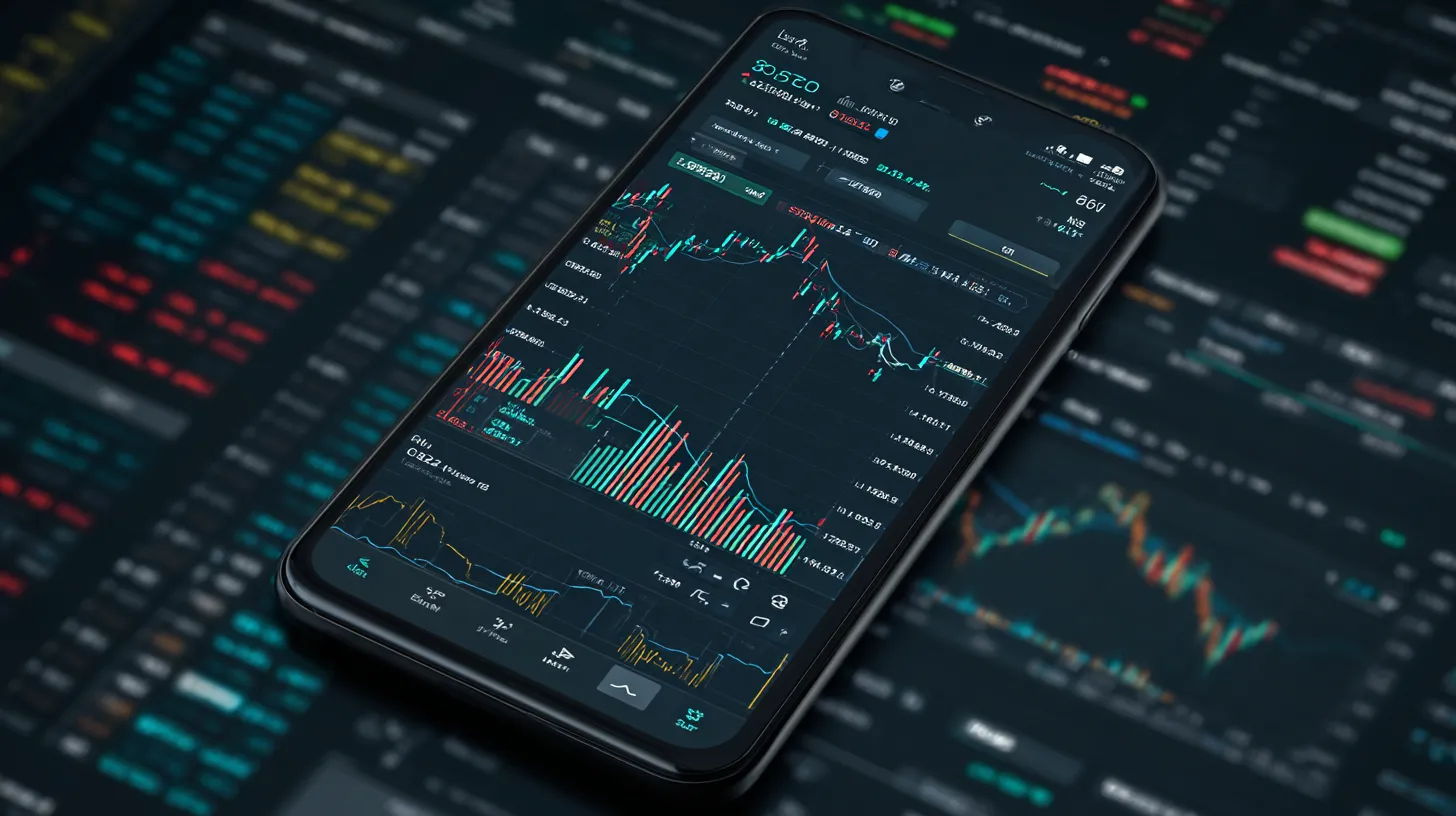
The 2026 era has perfected the “mobile-first” experience, adding a new dimension to our Platform and Tools Comparison FOR TRADING. Mobile apps are no longer just “viewing” tools; they are full-featured execution environments. With the integration of biometric security and 5G low-latency connectivity, placing a trade from your smartphone is now as reliable as doing so from a desktop workstation. The best mobile platforms provide real-time push notifications for price alerts and economic news, ensuring that you are never “out of the loop” even when you are away from your desk. However, professionals still recommend using mobile primarily for monitoring and emergency adjustments, while keeping the heavy analysis for multi-monitor setups.
🔒 Security, Regulation, and Data Integrity
When conducting a Platform and Tools Comparison FOR TRADING, the security of your data and funds is paramount. In 2026, cyber-threats have become more sophisticated, requiring platforms to use 256-bit encryption and mandatory multi-factor authentication (MFA). Beyond digital security, you must also look at “Data Integrity”—is the price on your screen the actual market price, or a manipulated version? This is where regulated brokers come into play, as they are legally required to provide transparent execution data. Using a tool that integrates with a Tier-1 regulated broker ensures that your “Technical Analysis” isn’t being undermined by a “B-Book” broker’s artificial price spikes or spread widening.
also read: 📈 Leveraged Trading Strategy: How to Master Perpetual Futures Without Blowing Up Your Account
🧠 The Final Verdict: Building Your Custom Ecosystem
The ultimate goal of a Platform and Tools Comparison FOR TRADING is to create a synergy between your psychology and your technology. Some traders thrive with a “minimalist” setup—just a clean chart and a fast execution button. Others prefer a “NASA-style” dashboard with multiple data streams and AI signals. There is no “one size fits all” solution; the best setup is the one that you can operate flawlessly under pressure. As we move through 2026, the most successful traders will be those who remain adaptable, constantly auditing their tools and upgrading their “trading stack” to stay one step ahead of the ever-evolving global markets.
📉 Conclusion: Turning Insight into Action
By completing this Platform and Tools Comparison FOR TRADING, you have taken the first step toward professionalizing your market participation. Technology is the great equalizer in finance; it allows a retail trader in a home office to compete with the giants of Wall Street. However, remember that the most expensive tool is useless without the discipline to follow a plan. Invest in your education as much as your software, and ensure that your tools serve your strategy, not the other way around. The markets of 2026 are unforgiving, but for those equipped with the right platform and the right mindset, the opportunities for wealth creation have never been greater.
🏆 Recommendation: Why Exness is the Perfect Hub for Your Tools
If you are looking for the ideal environment to implement everything discussed in this Platform and Tools Comparison FOR TRADING, Exness stands out as the premier alternative in 2026. Exness provides a seamless bridge between raw market liquidity and the world’s most advanced trading tools, supporting full integration with MetaTrader 5 and offering its own high-performance Exness Terminal. What truly sets them apart is their “Stop Out Protection” and remarkably stable spreads during high-impact news, ensuring that your sophisticated tools aren’t sabotaged by poor execution. Whether you are an algorithmic trader requiring low latency or a manual scalper needing instant withdrawals, Exness offers the infrastructure and transparency that modern professionals demand. By combining their institutional-grade execution with the analytical tools of your choice, you create a powerhouse setup that is built for long-term profitability. If you’re ready to elevate your market experience with a partner that understands the value of precision, try trading at exness? click here.