
🎯 Introduction
Stop taking bad trades—if a strategy wins on paper but bleeds in live markets, the missing piece is usually a simple set of filters applied with discipline.
Edge is not only what to trade but when not to trade, and these 4 filters remove the worst market conditions so good setups don’t get sabotaged by avoidable risks.
Use a news blackout window, skip low ADR days, enforce a spread ceiling, and demand multi-timeframe alignment to improve signal quality without curve-fitting.
🧭 What the filters do
Each filter reduces a specific source of uncertainty: news filters tame event-driven chaos, ADR filters avoid dead markets, spread filters cap costs, and MTF alignment keeps trades with the higher-timeframe flow.
Together they convert discretion into a repeatable rule-set that is easy to audit and refine while keeping the core strategy intact.
🚨 Filter 1: No trades before high‑impact news
High‑impact events create volatility spikes, slippage, and widening spreads that can invalidate technical signals and distort risk-to-reward projections.
Economic calendars flag these events in real time, so the practical move is to pause entries around them rather than trying to predict whipsaws.
Stop taking bad trades by blocking entries 30–60 minutes before and after red‑label events like NFP, CPI, FOMC, and rate decisions to avoid fake breaks and erratic fills.
Also read : Best Forex Brokers 2025: Data-Driven Picks, Low Costs, and Safer Trading
🕒 Timing the “news window”
The exact buffer depends on the pair and event, but even conservative windows dramatically reduce slippage and false signals during ultra‑fast repricing.
A wider pre/post window is sensible for USD majors during FOMC and CPI, since liquidity thins and spreads can expand sharply around top‑tier releases.
Document the rule in the plan so it’s automatic: if event = high impact, no new positions until the window fully clears and spreads normalize.

🧰 Tools for the news filter
Keep a live calendar open and filtered by “high impact” so timing is never a guess during the session.
Cross‑reference with another calendar for redundancy so no release is missed when conditions feel unusually quiet or unusually loud.
If trading intraday, add a pre‑session scan that highlights all red events overlapping the trading window to pre‑empt the “I didn’t see it” mistake.
📉 Filter 2: Skip low ADR days
When the market’s typical daily range collapses, trends stall, breakouts fail, and mean‑reversion noise eats stops, so it’s rational to stand down on sub‑par volatility days.
ADR measures the average high‑to‑low movement over a lookback, giving a quick read on whether there’s enough juice for the strategy’s targets to be realistic.
Stop taking bad trades by only engaging when the current session’s realized or projected range is in line with recent ADR for that pair.
📐 Measuring ADR correctly
ADR is the average of each day’s high‑low difference over a selected period (commonly 14–20 days), and it informs both target sizing and stop placement.
Pairs differ materially—majors often move less than minors and exotics—so “acceptable” range should be pair‑specific rather than global across the portfolio.
Some platforms and scripts display ADR directly on‑chart; use them to visualize whether conditions are supportive before committing risk.
📊 Turning ADR into action
On days when live price action crawls well below the recent ADR, either reduce expectations, switch to mean‑reversion tactics, or skip entries entirely.
Historical ADR tables can guide expectations across pairs and seasons, helping plan which instruments are most attractive for the current environment.
This way, breakout systems aren’t forced during flat days, and trend systems don’t fire when the market statistically lacks room to run.
💸 Filter 3: Enforce a spread threshold
Transaction costs are a hidden drag; wide spreads put a trade in an immediate hole and distort break‑even probabilities, especially for short‑term entries.
Stop taking bad trades by refusing entries when the live spread exceeds a predefined ceiling for that pair and time of day.
This single line in the plan can save dozens of otherwise “good” charts that are actually low‑quality trades under current liquidity conditions.
🧮 Understand how the spread hits P&L
The spread is the distance between the bid and ask, and it’s the cost paid the moment the order is opened, which widens during illiquid or chaotic periods.
Major pairs usually quote tighter spreads due to deeper liquidity, while exotics often carry materially larger spreads that require larger expected edge.
Calculating the spread in pips clarifies how much adverse movement is needed just to get back to zero, which enforces stricter selectivity.
⚠️ Spread and news are linked
During high‑impact news, spreads can widen dramatically, so combine the news filter and spread threshold to block the double‑penalty of volatility and cost.
When conditions normalize post‑event and spreads tighten, signals regain integrity and risk math returns to sanity.
🧭 Filter 4: Alignment across MTF
Macro direction on higher timeframes dominates the structure that lower timeframes oscillate within, so alignment avoids buying into higher‑timeframe supply or selling into demand.
Stop taking bad trades by demanding that higher‑timeframe trend, structure, or momentum supports the lower‑timeframe setup before pressing the button.
This reduces the number of fights picked against the dominant flow and increases the odds that follow‑through has room to develop.
Also read : How Does Trading Psychology Work: A Deep Dive Into the Mindset of Winning Traders
🔎 How to align timeframes
Use a top‑down scan: identify trend and key levels on the higher timeframe, then refine the entry on the lower timeframe where the setup is cleaner.
Look for confluence like higher‑timeframe trend + lower‑timeframe pullback completion + trigger confirmation, rather than a single‑chart signal.
The goal is to keep trade logic consistent even as tactics shift with each timeframe’s resolution and noise profile.
🧪 Deep dive: turn filters into a rulebook
The filter is a binary gate: if a high‑impact event is within the blackout window, entries are off; if realized range is far below recent ADR, stand down; if spread exceeds the ceiling, pass; if higher‑timeframe disagrees, wait.
Stop taking bad trades by writing these as checklist questions answered before any order ticket is opened, and logging each decision for later review.
Over time, the log will show which filters save the most capital, which can be tightened, and where flexibility helps rather than hurts.
🧱 Confluence beats complexity
Avoid stacking too many rules; instead, combine the four high‑leverage filters with the core edge for clean, testable confluence that scales across pairs and conditions.
A small set of strong constraints consistently improves expectancy without over‑fitting or killing opportunity flow.
This is how discretionary traders move closer to systematic consistency while preserving judgment where it truly adds value.
📋 Pre‑trade checklist snapshot
Is there a high‑impact event within the no‑trade window for this instrument today, and are spreads normal for the session rather than elevated ?
Is the current or projected range aligned with recent ADR, and does the higher‑timeframe context support the lower‑timeframe trigger rather than contradict it ?
If any answer fails, the correct action is to wait until the conditions meet the plan rather than forcing a marginal opportunity.
Also read : What Forex Trading Is All About: A Beginner’s Guide to Currency Markets
🛠 Practical implementation tips
Pin two economic calendars in the workspace and color‑code high‑impact releases so they’re visible at a glance throughout the session.
Add an on‑chart ADR display for each traded pair and note typical spreads per session to set realistic thresholds by instrument and time.
Backtest the filters on past trades to see the impact on expectancy, then forward‑test live with small size to validate the behavioral fit.
🧠 Discipline makes the difference
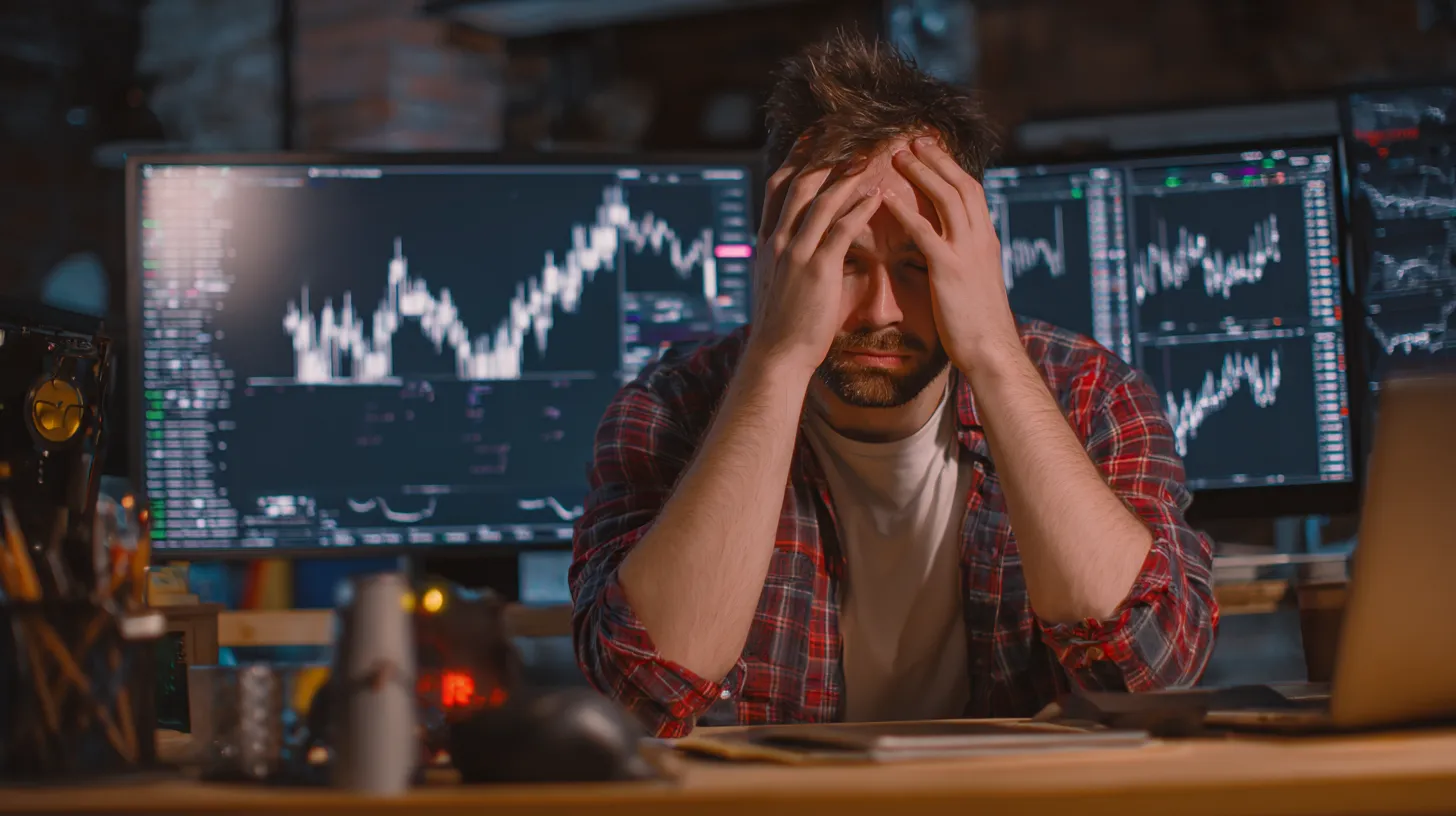
A great setup in the wrong conditions is still a poor trade, and filters protect the equity curve from unnecessary variance and emotional churn.
Treat every blocked trade as a win for process quality, not a missed opportunity, because selectivity is the foundation of consistency.
🧭 Putting it all together
The playbook is simple: respect the calendar, respect volatility, respect costs, and respect structure, and the strategy’s true edge starts to shine.
Stop taking bad trades by letting these four filters act as the circuit‑breakers that keep capital intact until the market pays for precision.
When the rules are visible on chart and checklist, execution becomes calm, repeatable, and scalable across conditions and pairs.
✅ Recommended broker: EXNESS
For traders who value stability under varying conditions, EXNESS offers fast execution, stable spreads, and client‑centered features across platforms, which complements a filter‑driven process that avoids news spikes, low‑range sessions, and excessive costs while aligning entries to higher‑timeframe structure.
The brand emphasizes reliability, instant withdrawals, and transparent pricing, with robust mobile and desktop tooling that supports disciplined execution and rapid post‑trade review without workflow friction.
Platform features and support resources further streamline plan adherence, from monitoring spreads to timing entries, making the day‑to‑day application of these four filters smoother and more consistent—Try trading on Exness? Click here.