🚀 Start Smart, Not Hard
best forex brokers for beginners. If you are about to open your first live account, you do not need hype—you need clarity, safety, and a proven roadmap. This guide cuts through noise with simple criteria, practical steps, and a decisive action plan so you can choose a broker that protects your capital, supports your learning, and sets you up to trade with confidence.
🧭 Why Beginner-Focused Matters
The right tools, fair costs, and strong education are non-negotiable when you are new. Choosing the best forex brokers for beginners means shorter learning curves, fewer costly mistakes, and a smoother path to consistency. A broker either amplifies your progress—or your pain. Your job is to pick a platform that removes friction.
✅ What Separates Great From Good
The best forex brokers for beginners share the same DNA: regulation you can verify, honest pricing, intuitive platforms, responsive support, rich education, and easy funding. If any of those are missing, you are paying for it somewhere else—usually in confusion, slippage, or hidden fees.
🛡️ Safety First: Regulation You Can Check
Regulation is your first risk filter. Look for brokers licensed by top-tier authorities (for example, FCA, CySEC, ASIC, FSCA, or comparable regulators in your region). Check license numbers on the regulator’s official site, not just the broker’s homepage. Avoid “offshore-only” brokers promising huge leverage without oversight. If a broker resists basic verification or buries legal entities, move on.
💸 Costs That Really Matter
Costs are not just spreads. Compare spreads, commissions, swaps, and the real cost of execution. The best forex brokers for beginners make pricing transparent: low spreads on majors during liquid hours, clear commission structures, and fair rollover rates. Avoid gimmicks like “zero commission” if spreads are wide. Remember, lower all-in cost per trade protects small accounts.

🖥️ Platforms You Can Actually Learn
Your platform should feel natural on day one. The best forex brokers for beginners offer MT4/MT5 or similarly intuitive platforms with mobile and web access, stable uptime, and clean charting. Look for one-click trading, risk calculators, easy order modification, and a watchlist you can customize. If the interface makes you hesitate, your execution will suffer.
🎓 Education That Builds Real Skill
Education must go beyond buzzwords. You want structured courses, platform tutorials, risk management lessons, live webinars, and strategy case studies. The best forex brokers for beginners back this up with a searchable knowledge base and community Q&A, so you are never stuck. Quality education compresses years of trial and error into months.
💳 Funding That Is Fast and Fair
Deposits and withdrawals should be predictable, quick, and low cost. Look for multiple payment methods, transparent processing times, and no withdrawal games. Your money should move in both directions with the same ease. If funding feels complicated, that is a red flag.
⚡ Execution, Slippage, and Fills
Your broker’s business model affects your fills. Look for consistent execution speed, tight average slippage during news and normal conditions, and clear order types (market, limit, stop, stop-limit). Test with a demo and a tiny live account to see how orders behave when markets move fast. Smooth execution protects you from surprise losses.
Also read : Best Regulated Trading Brokers for Forex and Crypto in 2025: Trade Smart, Trade Safe
🧰 Risk Tools for Real Traders
Smart brokers give you tools that keep you in the game: guaranteed stop-loss orders (where available), margin and free margin alerts, built-in position sizing calculators, and negative balance protection in eligible regions. These tools help you stay disciplined so one mistake does not wipe out months of progress.
🧪 Demo First, Then Micro Live
Practice the mechanics in demo, then shift to a micro live account to feel real emotions with tiny risk. Treat the demo like a flight simulator: test entries, exits, journaling, and risk rules. When your process feels stable, migrate to small live risk and scale slowly.
📝 A Simple Onboarding Checklist
The best forex brokers for beginners make onboarding easy. Verify identity and address smoothly, choose the right account type (Standard, Raw/Pro, or Cent/Micro), set base currency, connect your platform, and enable two-factor authentication. Fund small, trade smaller, and focus on process over profits for your first 90 days.
⚠️ Beginner Mistakes to Avoid
Do not over-leverage, chase news spikes, or spread yourself across 20 pairs. The best forex brokers for beginners will not save you from poor habits. Use a max risk per trade of 0.5–1%, trade only your A+ setups, and stop when your plan is done. Most new traders do not fail from bad analysis—they fail from no rules.
🔍 Deep Dive: Criteria That Truly Move the Needle
Here is where decisions compound. Latency and execution quality affect scalpers and day traders. Liquidity depth matters during volatile sessions. Stable spreads on EURUSD, GBPUSD, USDJPY during London/NY overlap are essential. If you trade around news, monitor how spreads widen and how quickly they normalize. The best forex brokers for beginners also provide copy trading or social insights you can audit, not blindly follow. Look for transparent performance metrics, risk controls on copied positions, and the ability to detach or override trades. Finally, read the client agreement: understand margin calls, stop-out levels, and how the broker handles extreme events.
🧠 Psychology: Keep It Boring (That’s Good)
Consistency is a habit, not a feeling. Limit your watchlist to 4–6 pairs, trade at set hours, and use checklists before clicking buy/sell. If a setup does not meet your criteria, it is not a setup—it is a guess. Boring execution creates exciting results over time.
🔄 Scaling Up Without Breaking Your Edge
When results are stable for eight to twelve weeks, scale gradually. Increase position size by 10–20% rather than jumping 2–3x. Keep a rolling journal of max drawdown, win rate, and average R multiple. If any of those metrics deteriorate, scale back and diagnose. Growth is a staircase, not an elevator.
🧭 Choosing Your Account Type
Standard/Classic: spread-only pricing, simple for new traders.
Raw/Pro: ultra-low spreads plus small commission, ideal for active traders.
Cent/Micro: tiny lot sizes for learning with minimal monetary stress.
Match account type to your style and capital. If you scalp, raw pricing often wins. If you swing trade, a standard account may be fine.
Also read : Forex Trading Session: Mastering the Market Clock for Maximum Profit
📊 Building a Simple, Durable Strategy
Pick one timeframe for signals (for example, H1 or H4), one for trend (D1), and one for precision (M15). Combine a trend filter (moving average or market structure), a trigger (breakout, retest, or momentum), and a fixed risk model (for example, 0.75% per trade with a 1:1.5–1:2 target). Journal screenshots and reasons to enter/exit. Simplicity beats complexity when you are new.

🧩 How to Compare Brokers Yourself
Verify regulation and entity details.
Test platform stability and one-click order flow.
Compare all-in trading costs across your pairs and sessions.
Ask support a tough question and time their reply.
Run a tiny live test for execution during different sessions.
If a broker passes these with ease, you are likely in safe hands.
📣 Strong CTA: Make Your First Move Today
Analysis without action changes nothing. The best forex brokers for beginners are the ones you can verify, test, and trust. Open a demo now, practice your process this week, then move to a small live account with tight risk. Give yourself 90 days to build discipline, and let consistency—not excitement—drive your results.
🏁 Final Thought: Start Clean, Stay Consistent
You do not need the “perfect” broker—you need a transparent, reliable one that supports your learning. Protect your capital, obsess over execution quality, and keep your strategy simple. Small wins compound faster than heroic trades ever will.
⭐ EXNESS: A Smart Alternative for New Traders
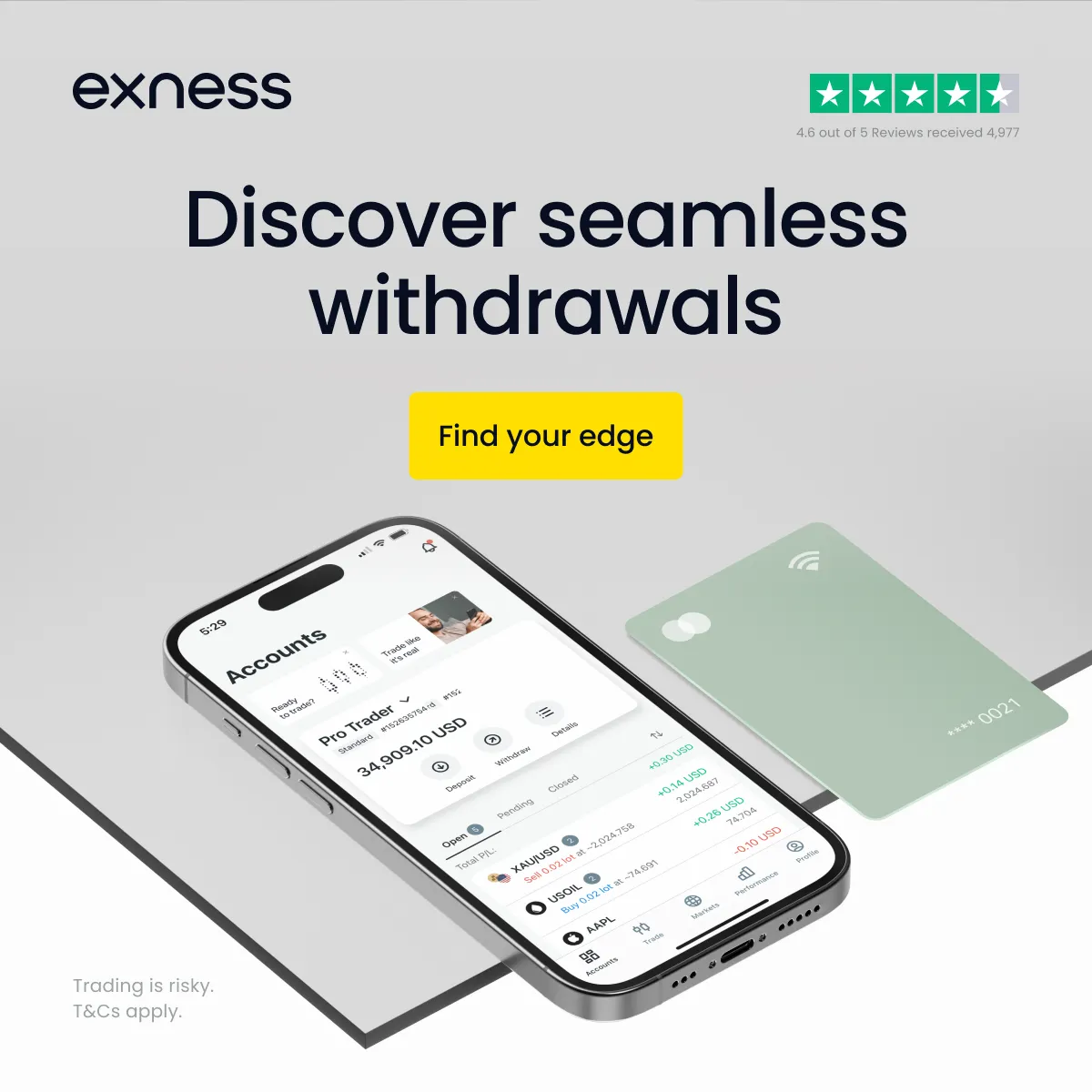
If you want a broker that blends strong regulation, fast execution, tight pricing, and user-friendly platforms, EXNESS is a compelling option. It offers multiple account types (including low-spread options), seamless deposits and withdrawals, robust platform support (MT4/MT5), and practical tools for risk management and learning. With transparent conditions and responsive support, EXNESS is well-suited for traders who value stability and scalability from day one. Want to try trading on Exness? Click here